












Exploring the Walled Gardens at Scampston Hall

When we arrived at Scampston Hall we discovered that there are actually twelve gardens within the walled garden, which is way too many to share in one post so I’ll share some here, some later and some of them in individual posts, like I did earlier in the week with our look at the Potager.

The individual gardens also form a rough route around the garden, though we didn’t follow the gardens in number order as well structure is good, but gardens are best wandered through, right?

But let’s start with a wander down the Plantsman’s Walk which led us along the length of the garden, along an avenue of limes and plenty of flowers, colour and glorious sunlight - and it was a great way to introduce us to the garden.
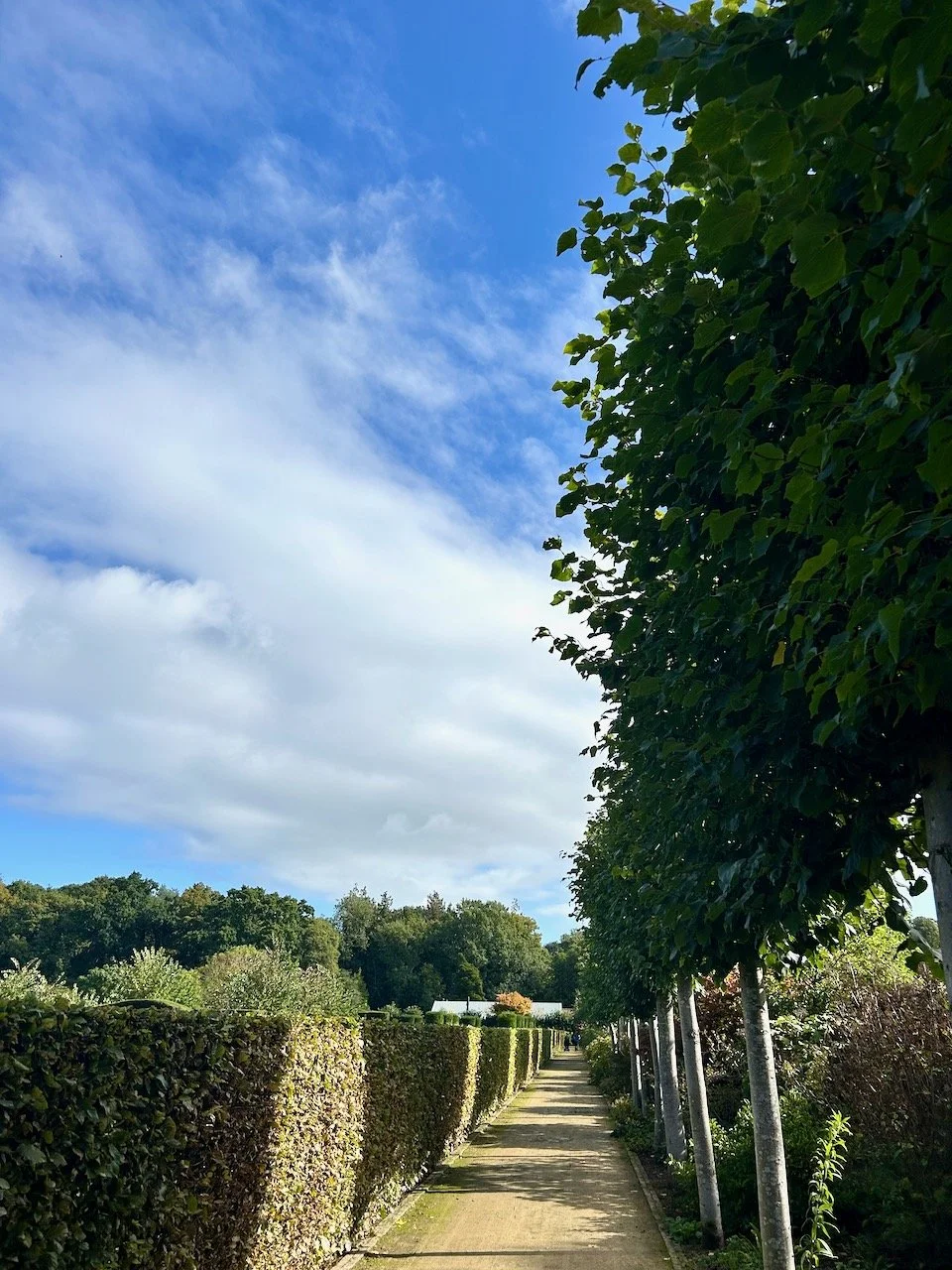
Looking along the Plantsman's Walk at Scampston Hall
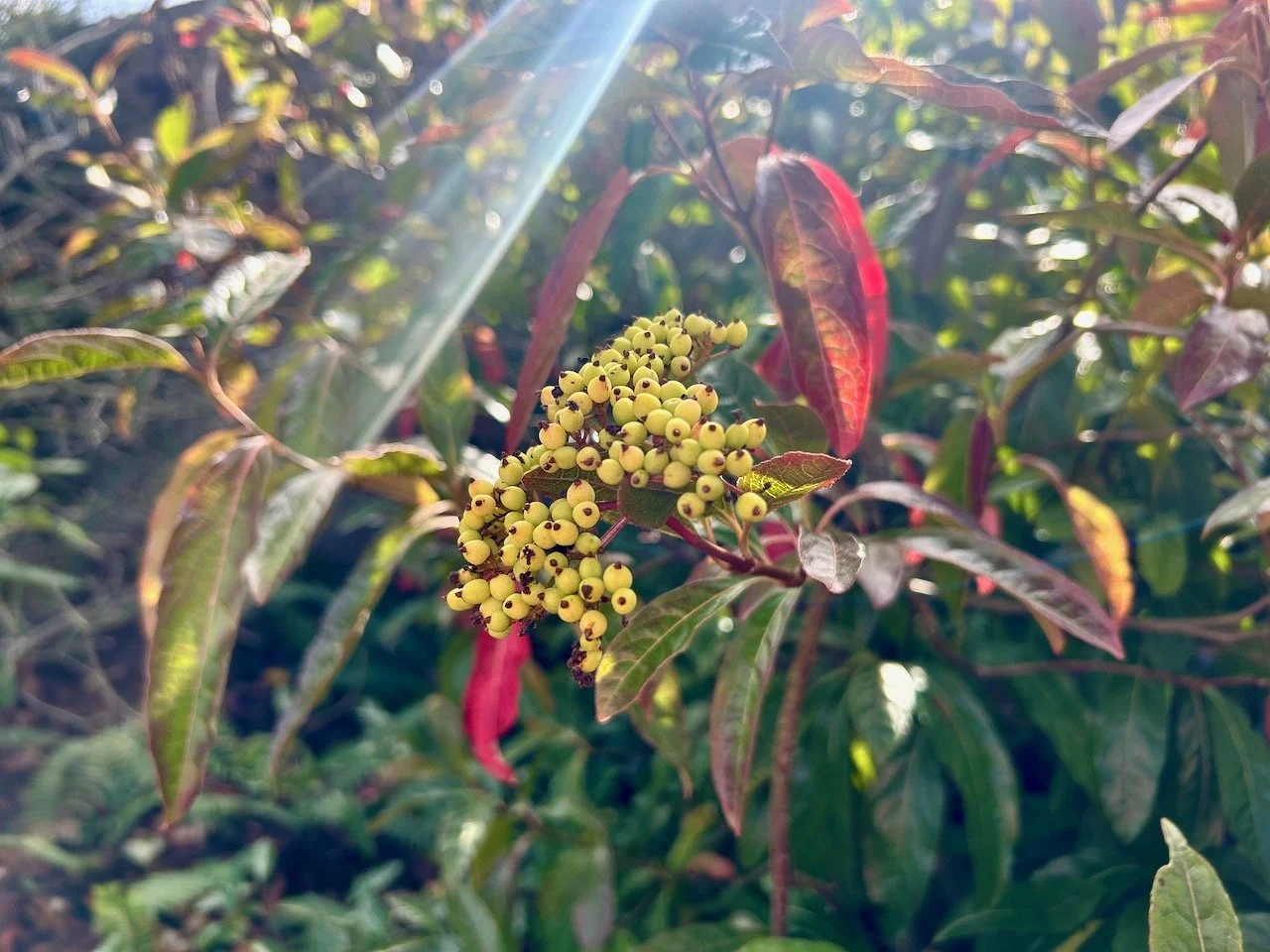
Sunlight shining through the leaves and onto berries and red leaves

The garden notes suggest there’s plenty to see in spring, summer and autumn - and that’s one of the joys of a well planted and thought out garden, and one of the worries I have for my own garden. Scampston looked great when we visited in the autumn and I’d be keen to visit again to see it at other times of the year.
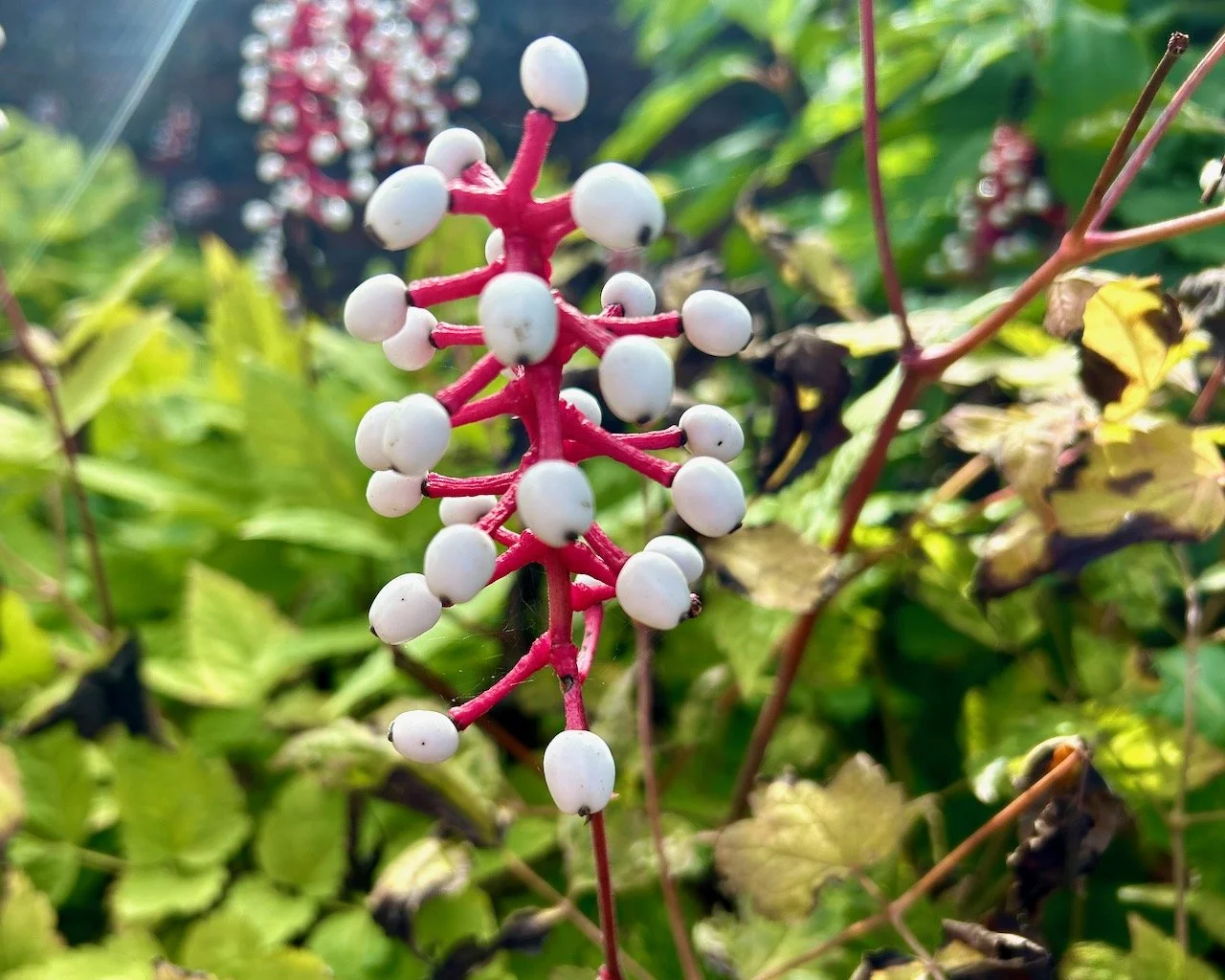
White berries on a red stem

As we turned the corner of the Plantsman’s Walk we got our first glimpse of the second garden I’m sharing in this post, the Drifts of Grass. There’s swathes of grasses which form the design of the garden, and when you’re centre on you can really appreciate the symmetry of the garden, and elegant though it was after the Plantsman’s Walk it did feel incredibly minimalist.
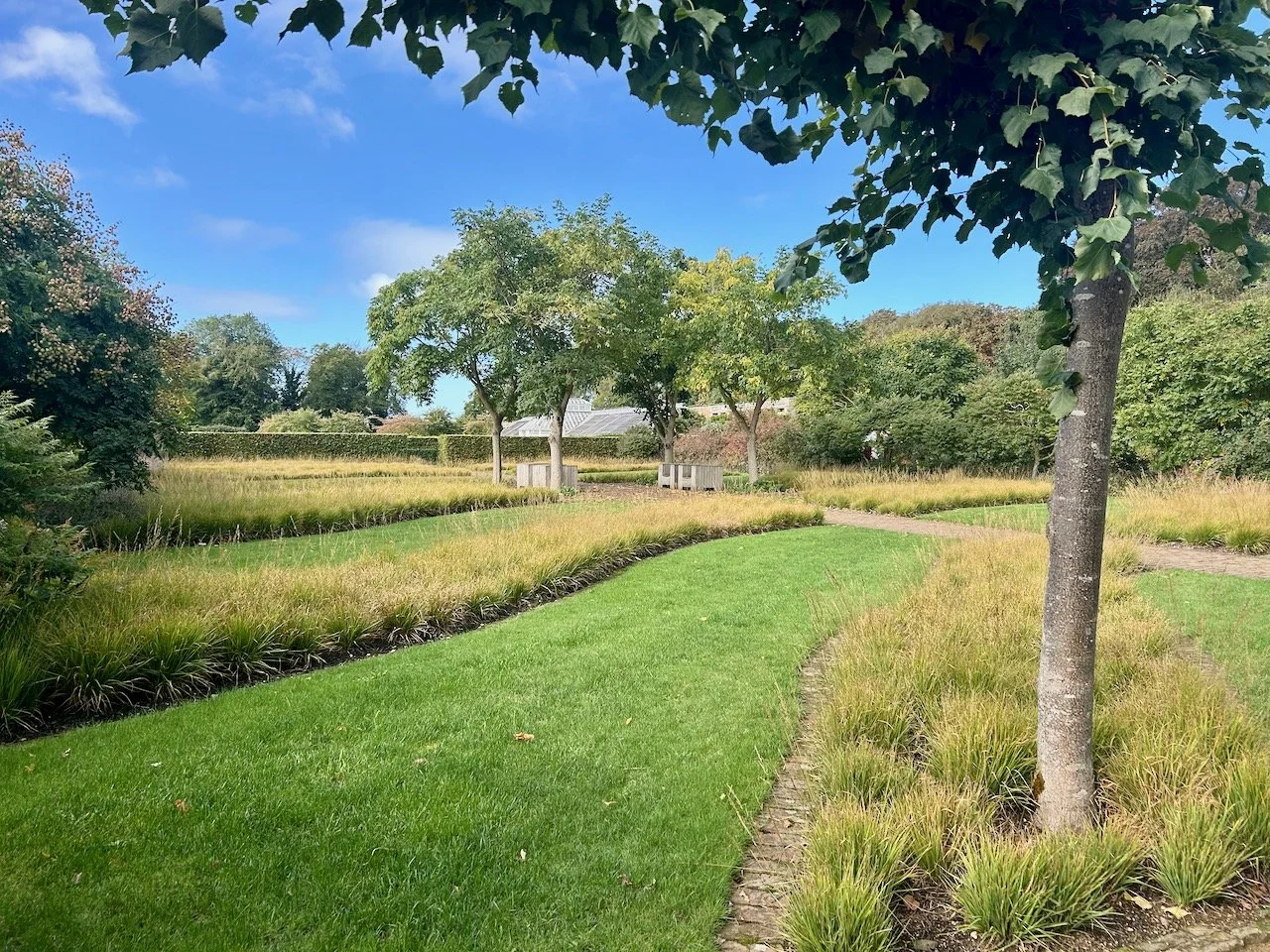
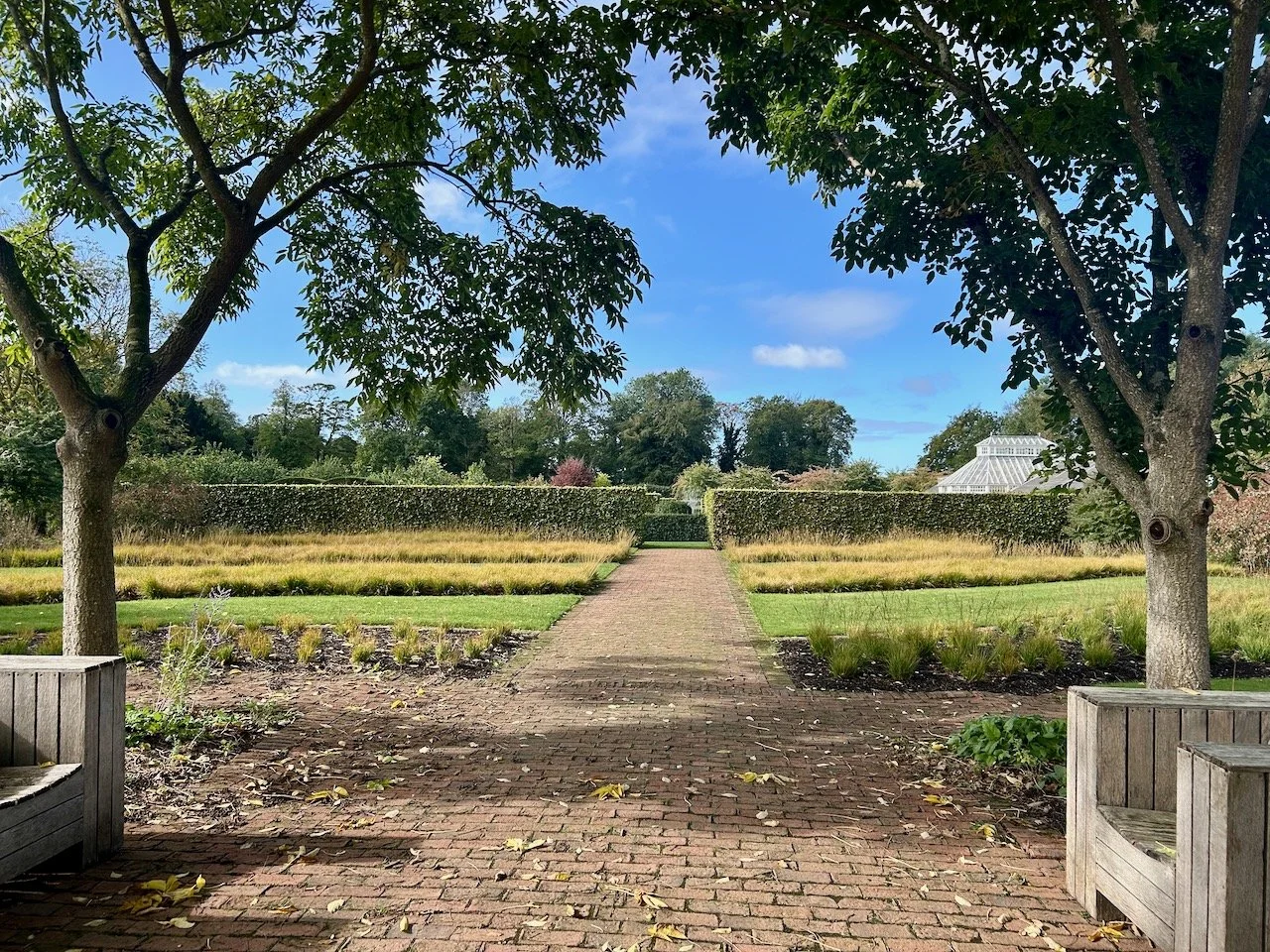
Walking into the Drifts of Grass garden
Standing at the entrance to the Drifts of Grass garden and its symmetrical layout

After enjoying the grasses, and admiring the wooden boxy chairs (you can just see in them in the bottom of the photo above) we headed around to the left and into the Cut Flower garden passing by with the greenhouse behind us.
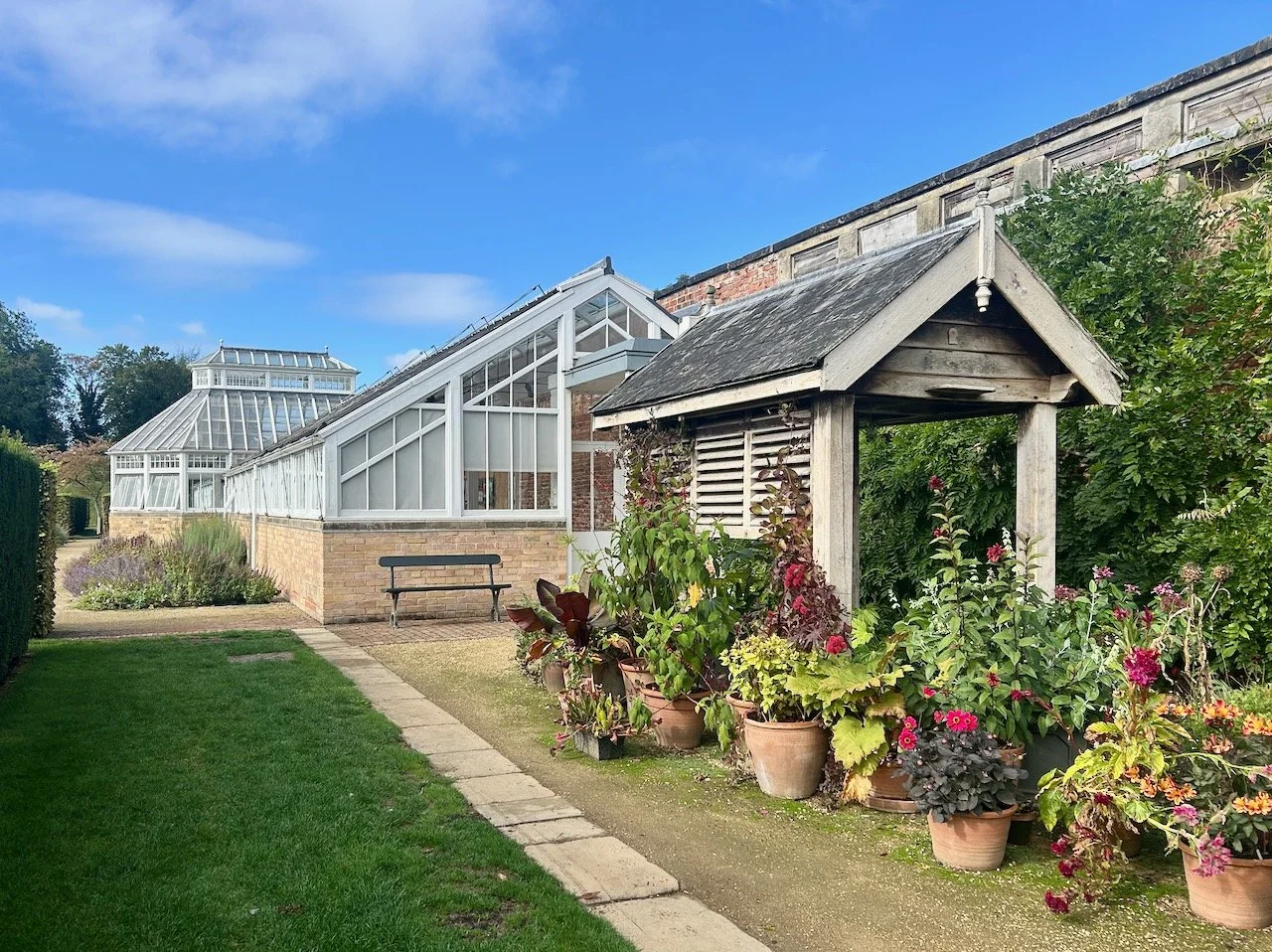
The greenhouse is in the background, in the foreground there's an array of pots with a shelter behind

The cut flower garden wasn’t as I expected, it had many circular flower beds stretching down its length, and on the edges were the most laden of fruit trees. I hadn’t expected it to be so, well park-like - I’d expected something much more functional, so I was pleasantly surprised.
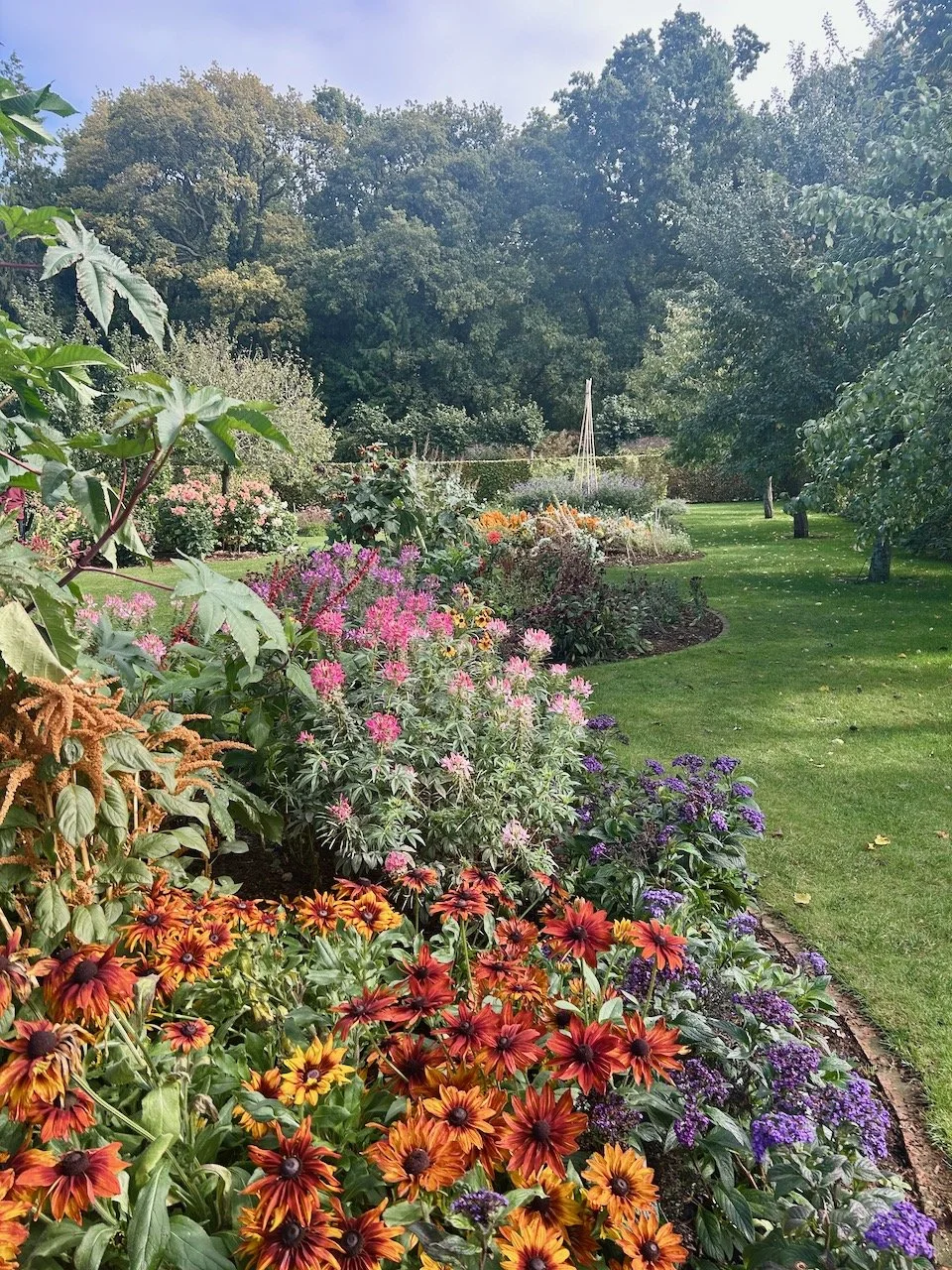
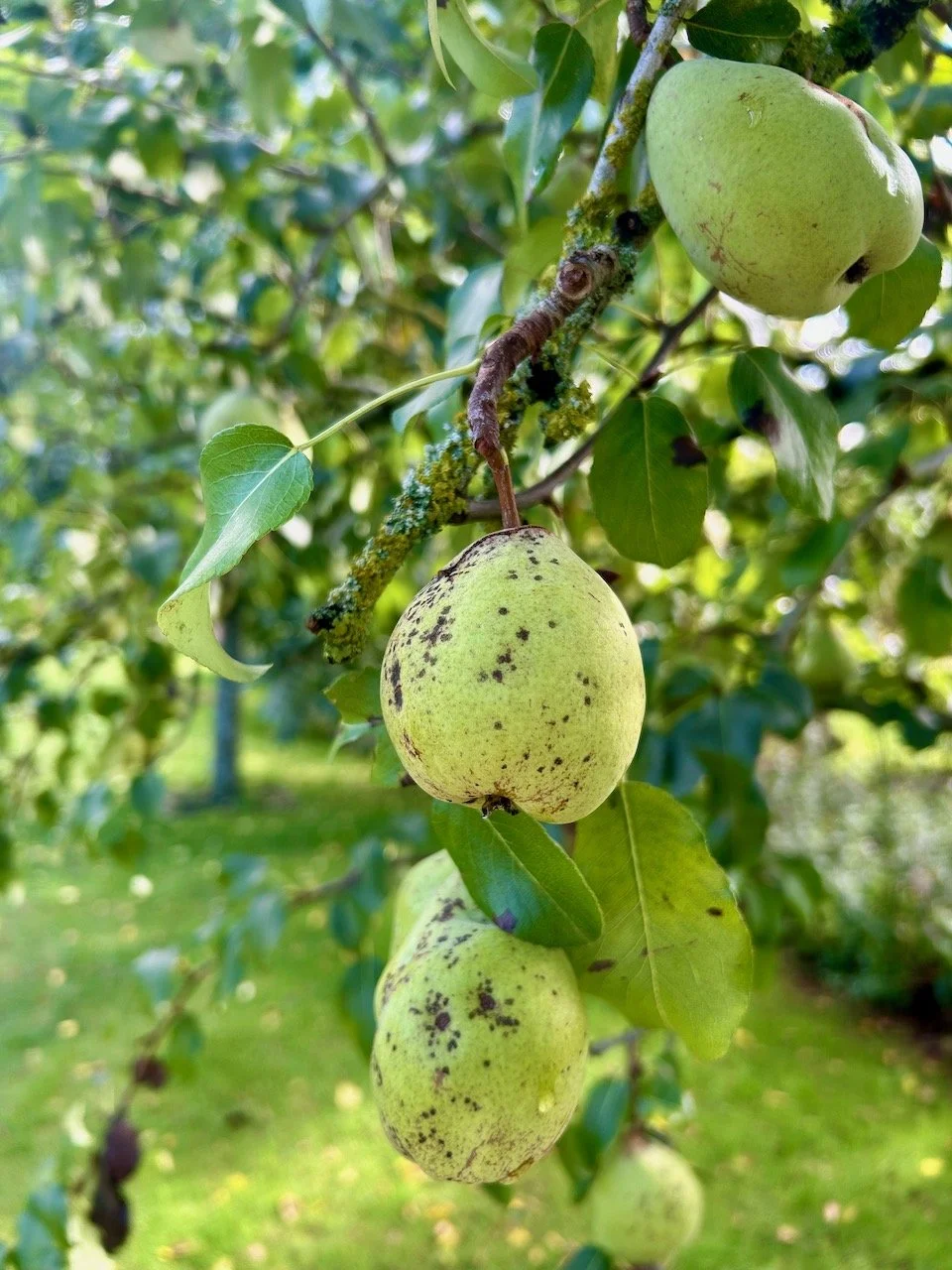
Entering into the Cut Flower garden with circular beds in the centre of the garden and orchard trees on the edges of the space
Pears growing plentifully at Scampston Hall

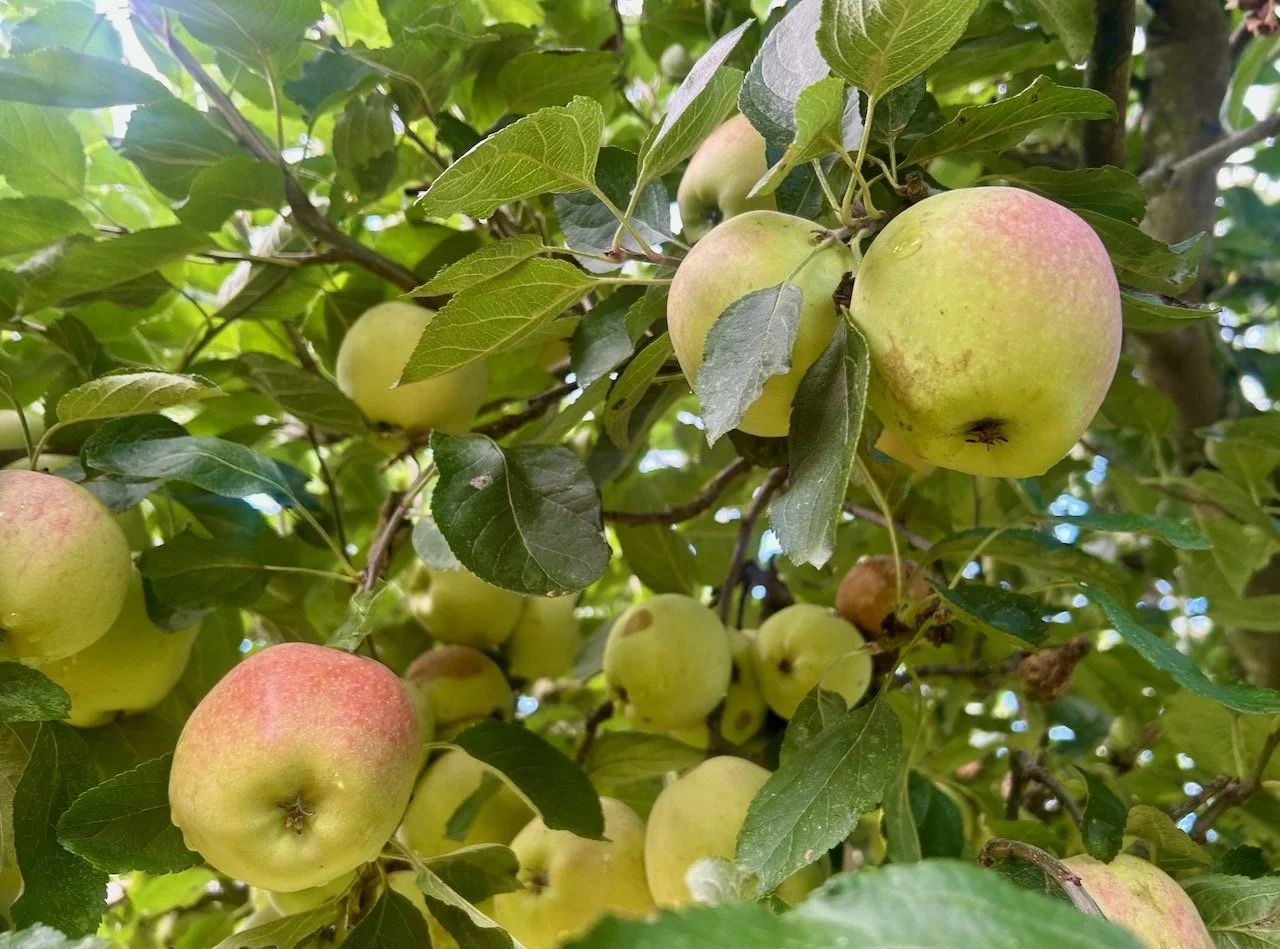
It seems that Scampston too was enjoying a lot of fruit on their trees, it wasn’t just my little crab apple tree that was heavily laden, which was reassuring. As well as plenty of pears, there were damsons and apples galore - it was going to be quite a harvest, and quite a year for crumbles, jellies and jams I’m sure.
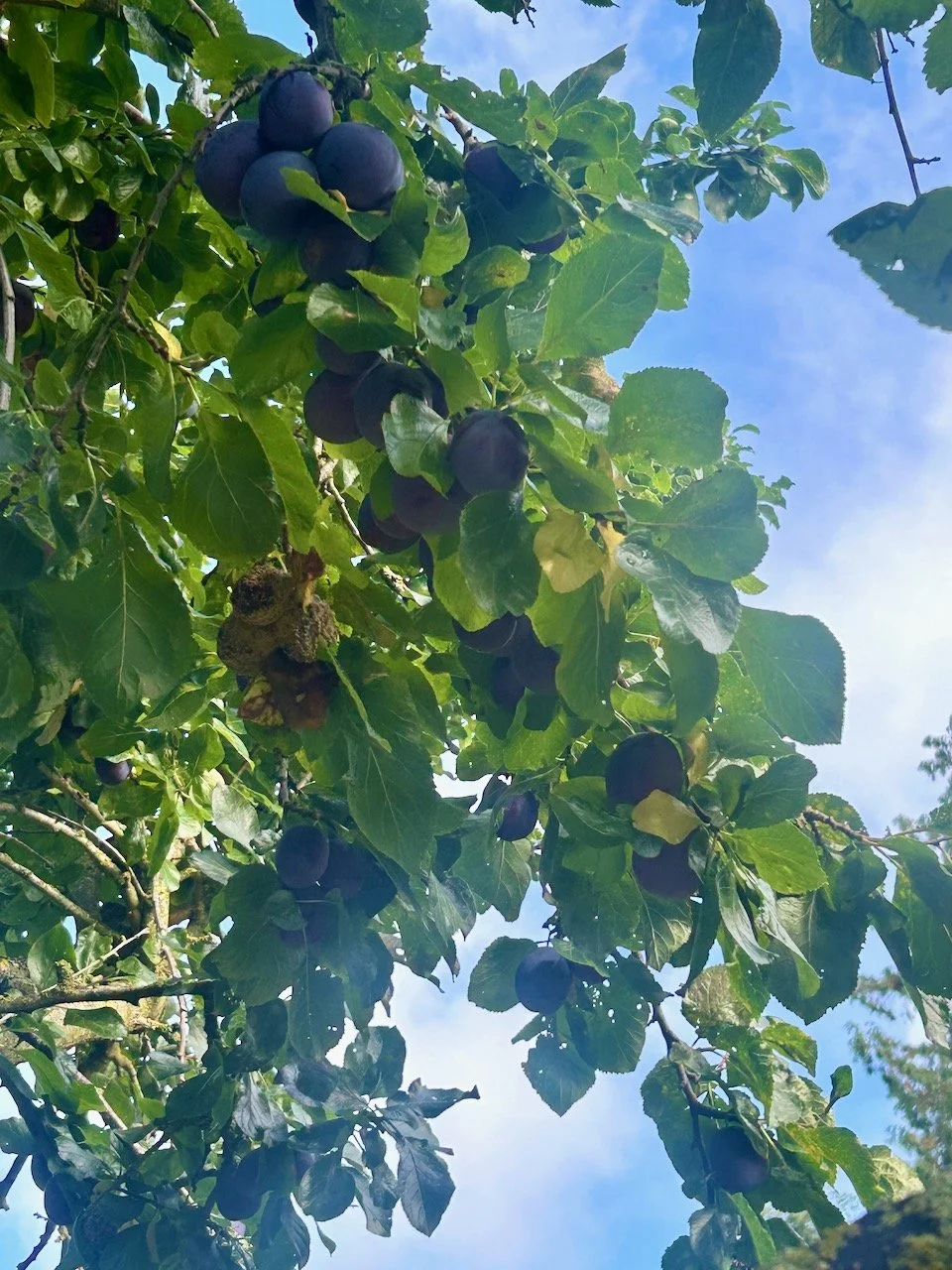
Plums or damsons also growing at Scampston Hall
The apple tree was laden with many apples ready for picking

The dahlias were still out, and these dinner plate sized ones were just spectacular. I do really need to make sure I add some of these to my plant wish list, as every time I see them I’m smitten.
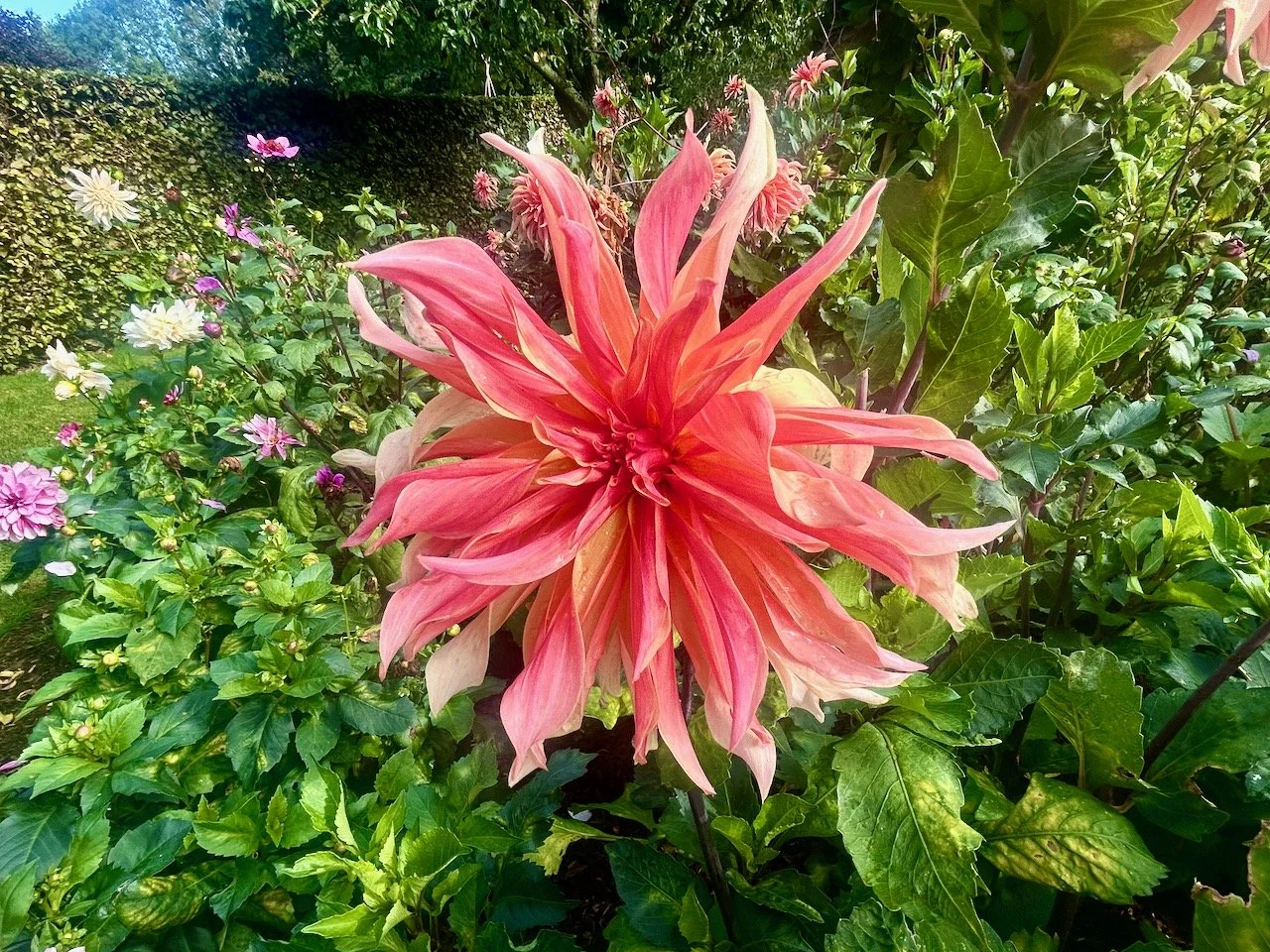
A flowering dahlia as big as your head (almost)
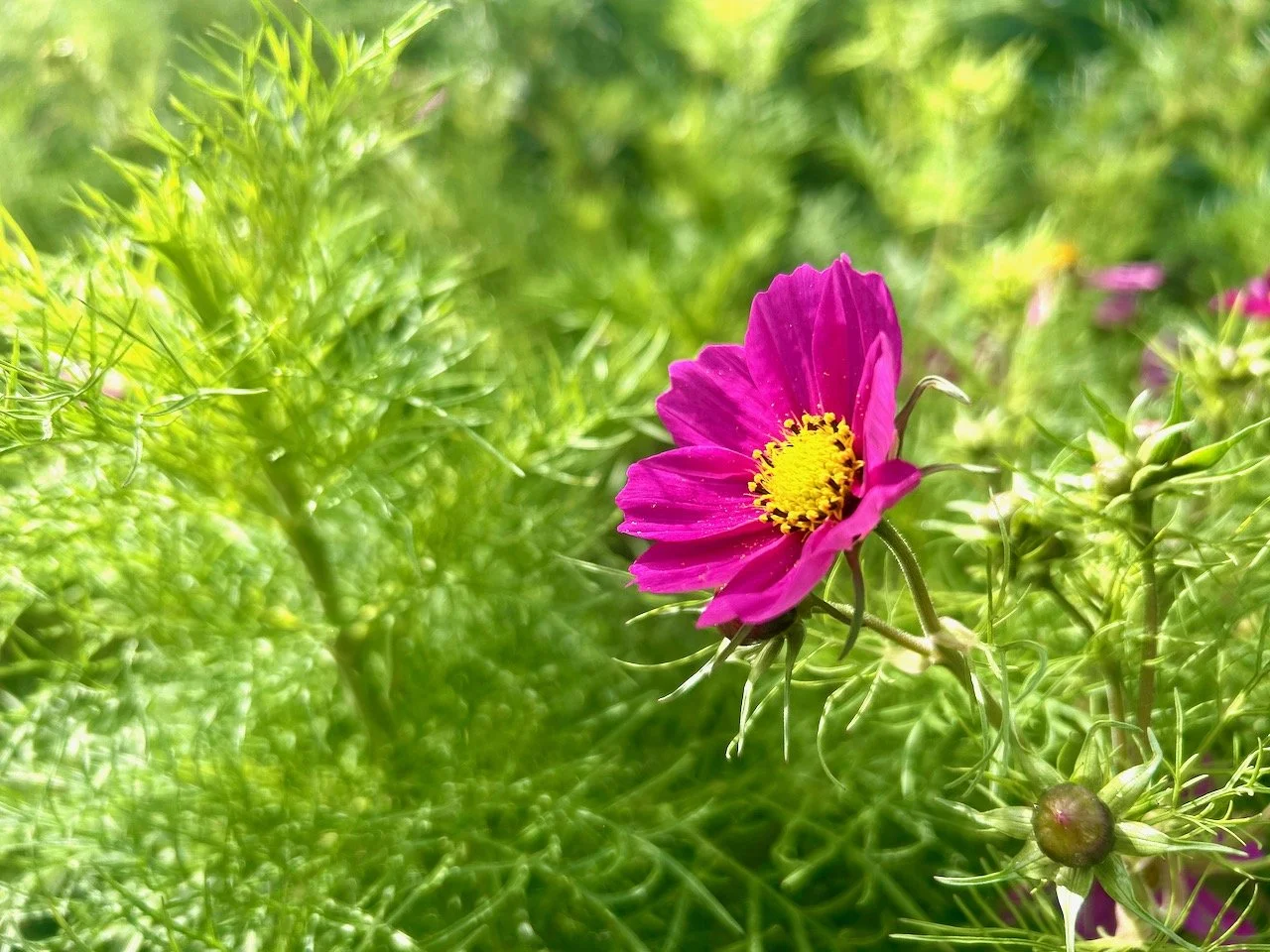
The sunlight catching a cerise pink cosmos flower

I told you we were lucky with the weather, and especially the sun - but how glorious does this Cosmos look bathed in the sunlight?

So there’s our first exploration of the walled gardens, though we’ve only covered three of the gardens today, four in total with the Potager - I thought we’d see more today, but don’t worry we will in a week or so. Until then, let’s hope we get similar sunlight (albeit spring sun) into our own gardens.
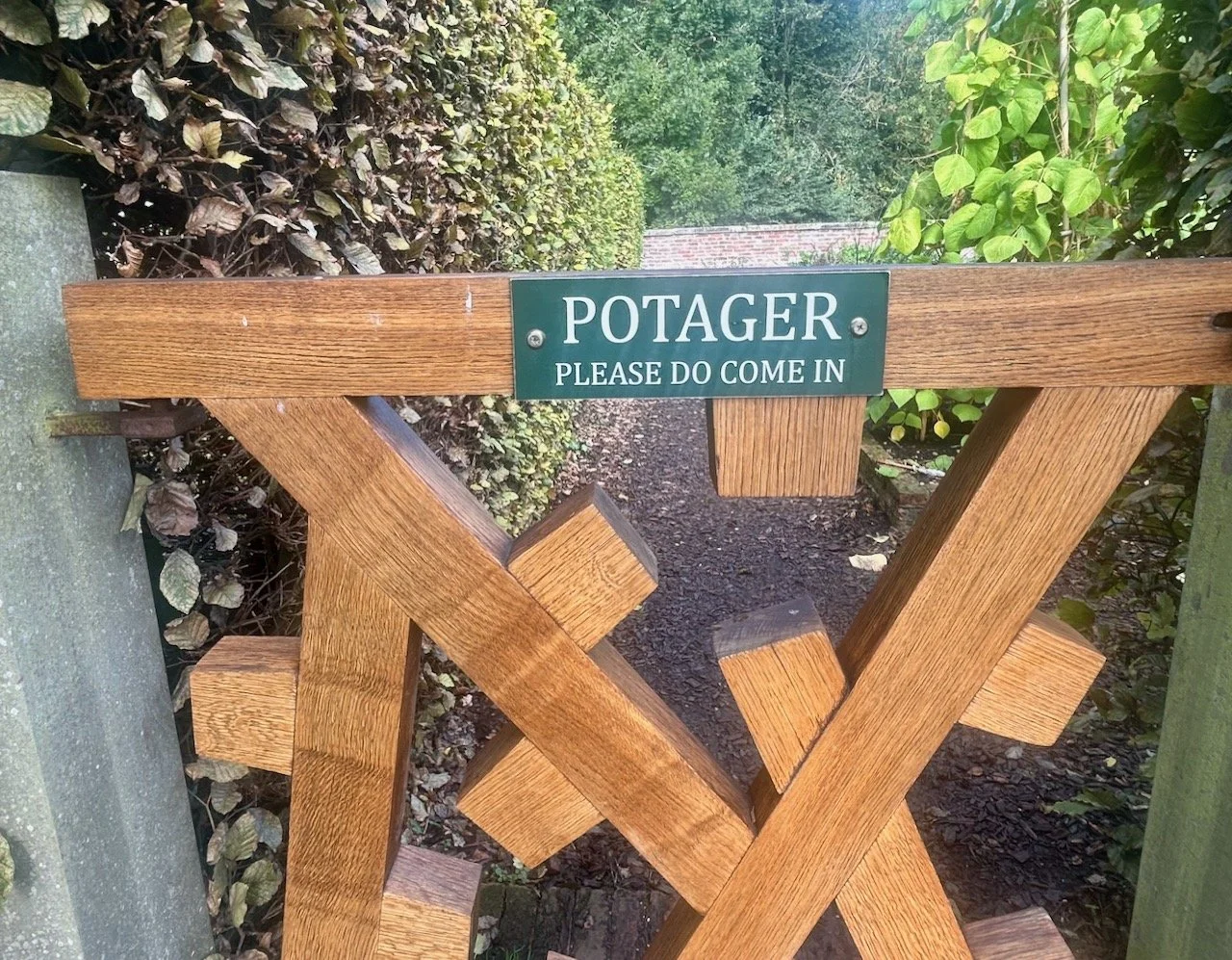
The Potager at Scampston Hall

It’s been a while since our weekend in Malton and I’ve been meaning to share more from our visit to the Walled Gardens and Parkland at Scampston Hall. I took many photos (no surprise there) and so I’ll be sharing a series of posts from our visit finally - it’s a great place to visit with a fab cafe too, so if you’re close by and considering a visit, then definitely go.

The Walled Garden was designed by Piet Oudolf in 1999, and while Oudolf is often now imitated this garden remains his largest private commission in the UK. There are twelve sections to the walled garden, and you know how much I love a potager, or a vegetable garden, so that’s where we’re starting.

Along with the cut flower garden, the vegetable garden supplies the house and cafe with a range of fresh flowers and vegetables. As with any productive garden the planting schemes change regularly, but isn’t that what we love about gardens?

Stepping through the Potager gate which contains the work Yat - Yorkshire dialect for gate

Any gate inviting you to come in in a garden is a welcome sight, and this one especially so with it’s modern block design by local craftsman Peter Coates. I seem to have cut my photo off though, so it’s not easy to see that it contains the word Yat, which is the Yorkshire dialect for gate. A gate with meaning, as well as good looks - yes, I’m definitely coming in!

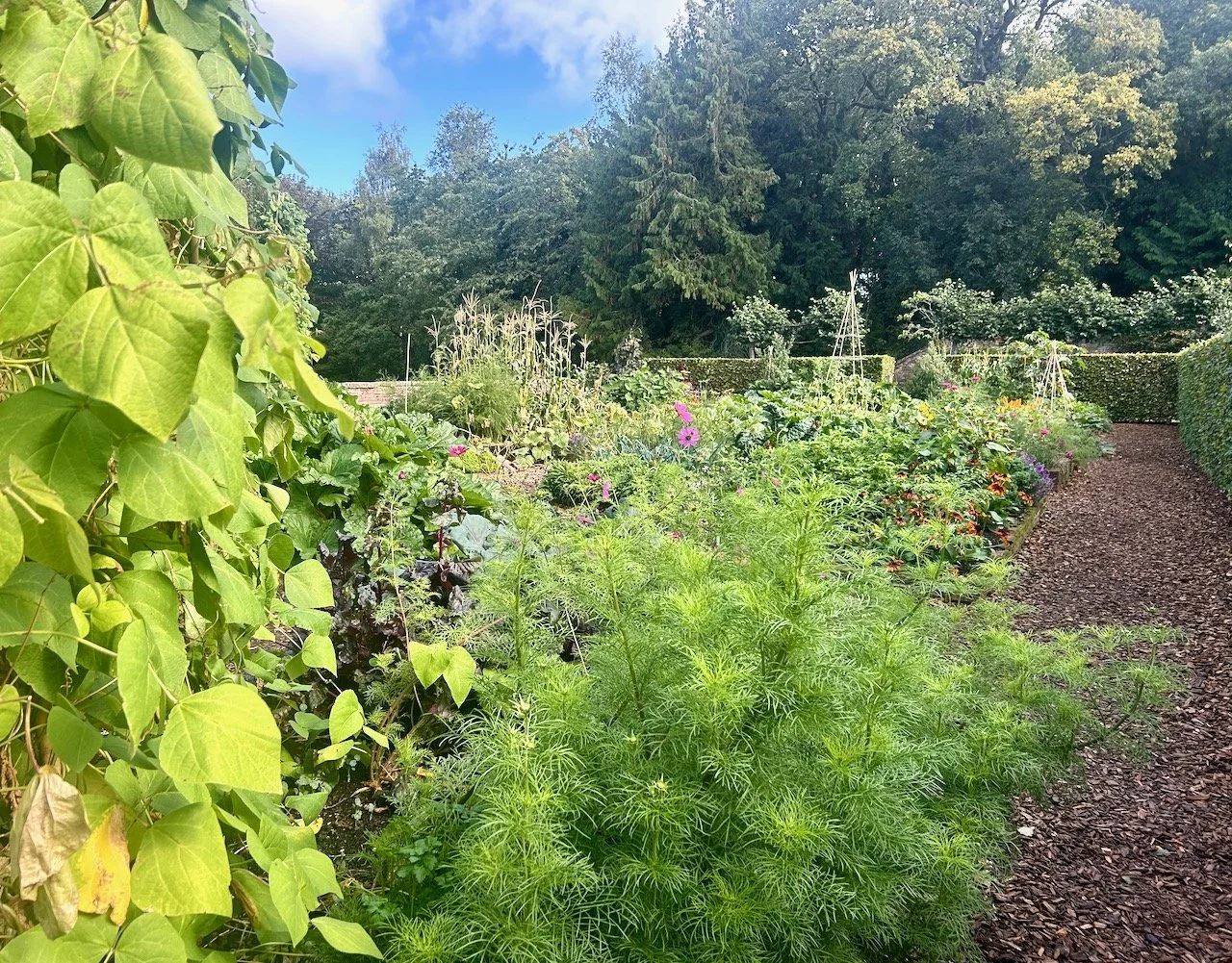
The view of the potager after stepping through the gate

Wow. I so love a productive garden, and when we visited in September many veg plots are at their peak, so it’s a great time to visit.

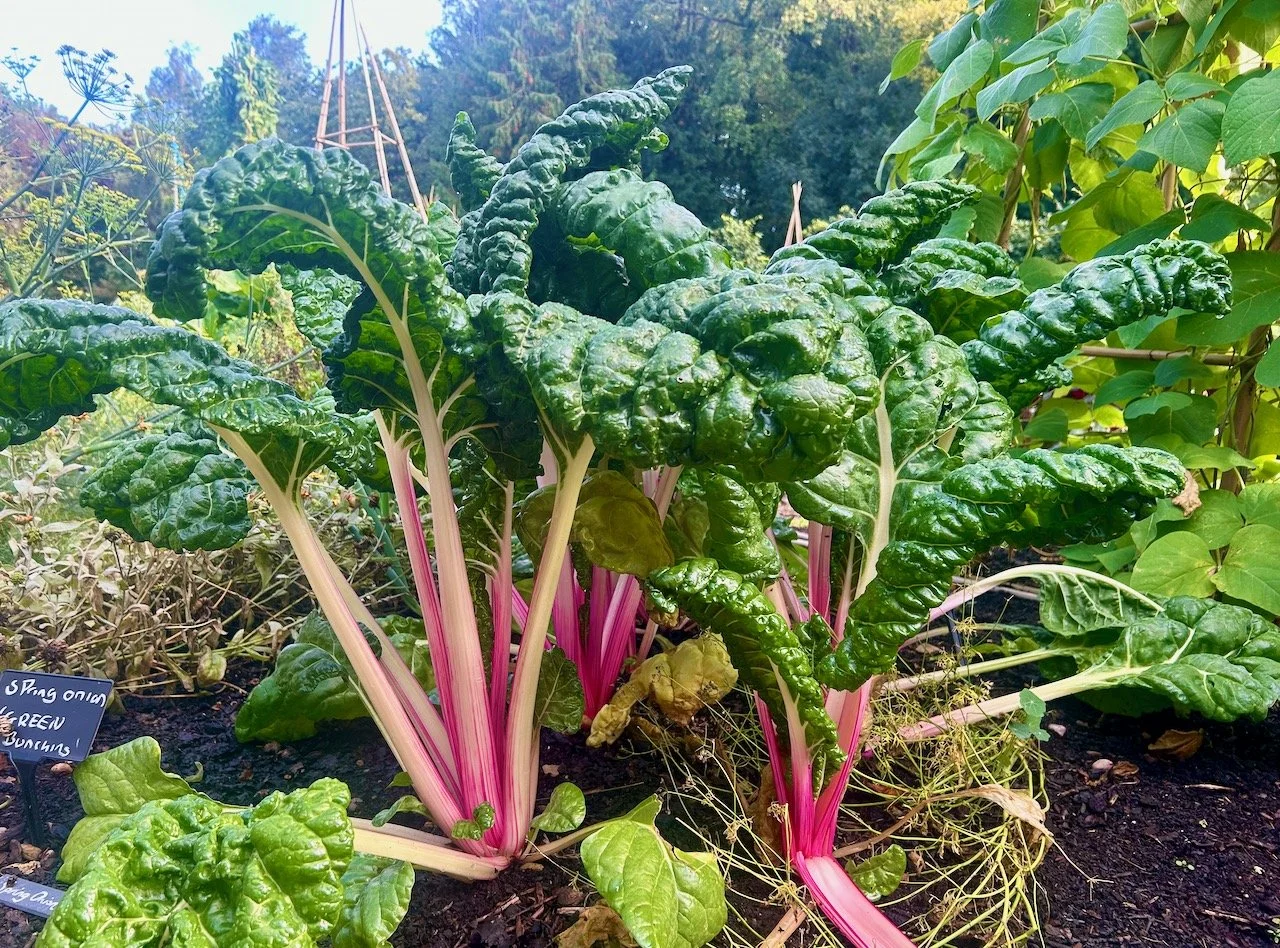
Just look at that Ruby Chard, I’d forgotten how beautiful and structural they can be - I definitely want these in my garden, even though they’re one of the veg that MOH has been known to turn his nose up at, though thinking again that could be due to the sheer volume of chard we grew when we had our allotment!

The bright pink stems of the ruby chard growing at Scampston Hall
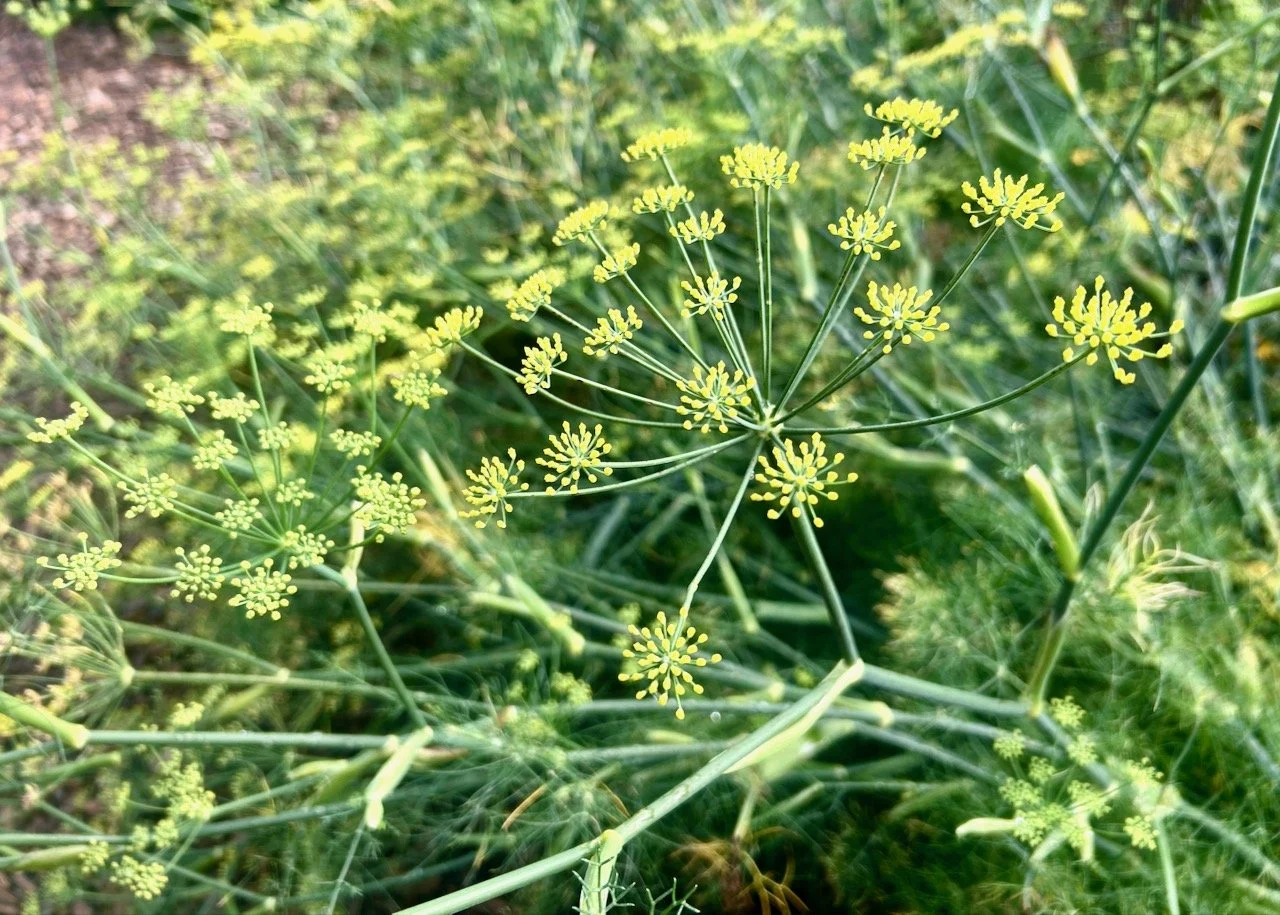
The almost flowering flowerheads of the fennel

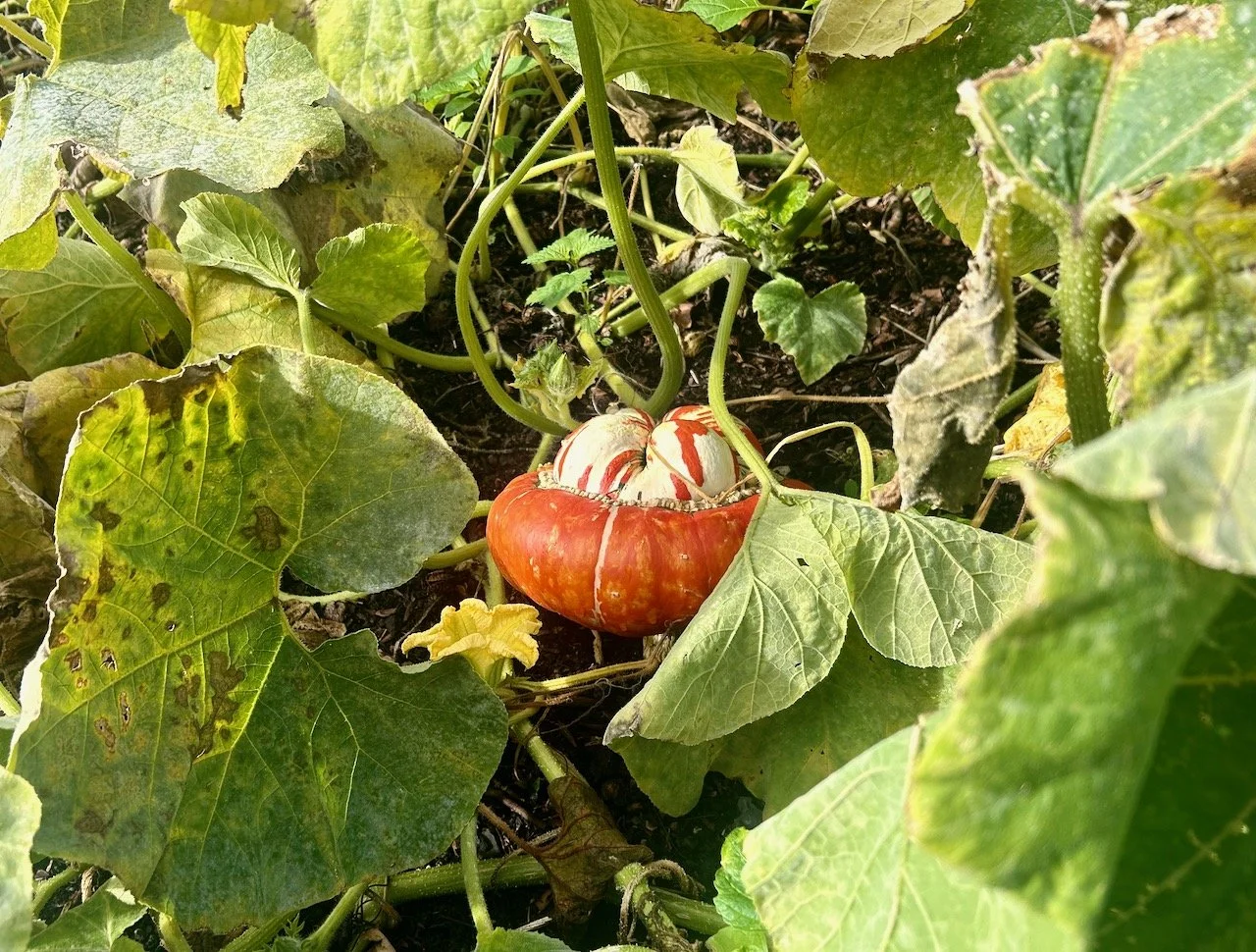
I found two of my favourite pumpkins here too, this Turks Turban and the bluer skinned Crown Prince. The third that I’d add to my favourite pumpkin list is the Red Kuri or Onion Squash which I have managed to grow in my previous garden. I’m not sure if I’ll find a space for pumpkins here - they ramble a lot - but if I can I will.

A magnificient Turks Turban pumpkin growing in a large pumpkin patch
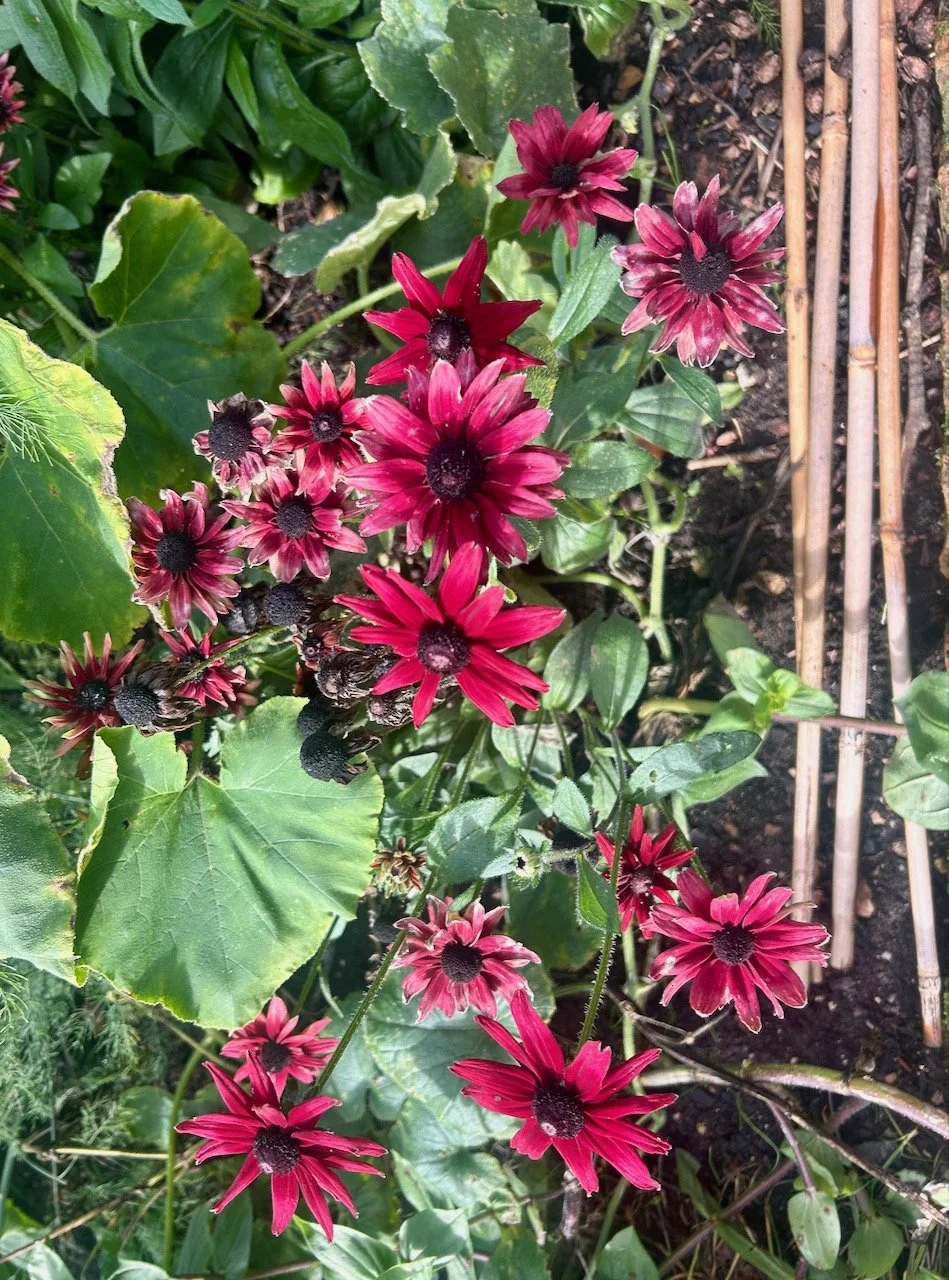
Vivid deep pink coneflowers in the potager at Scampston Hall

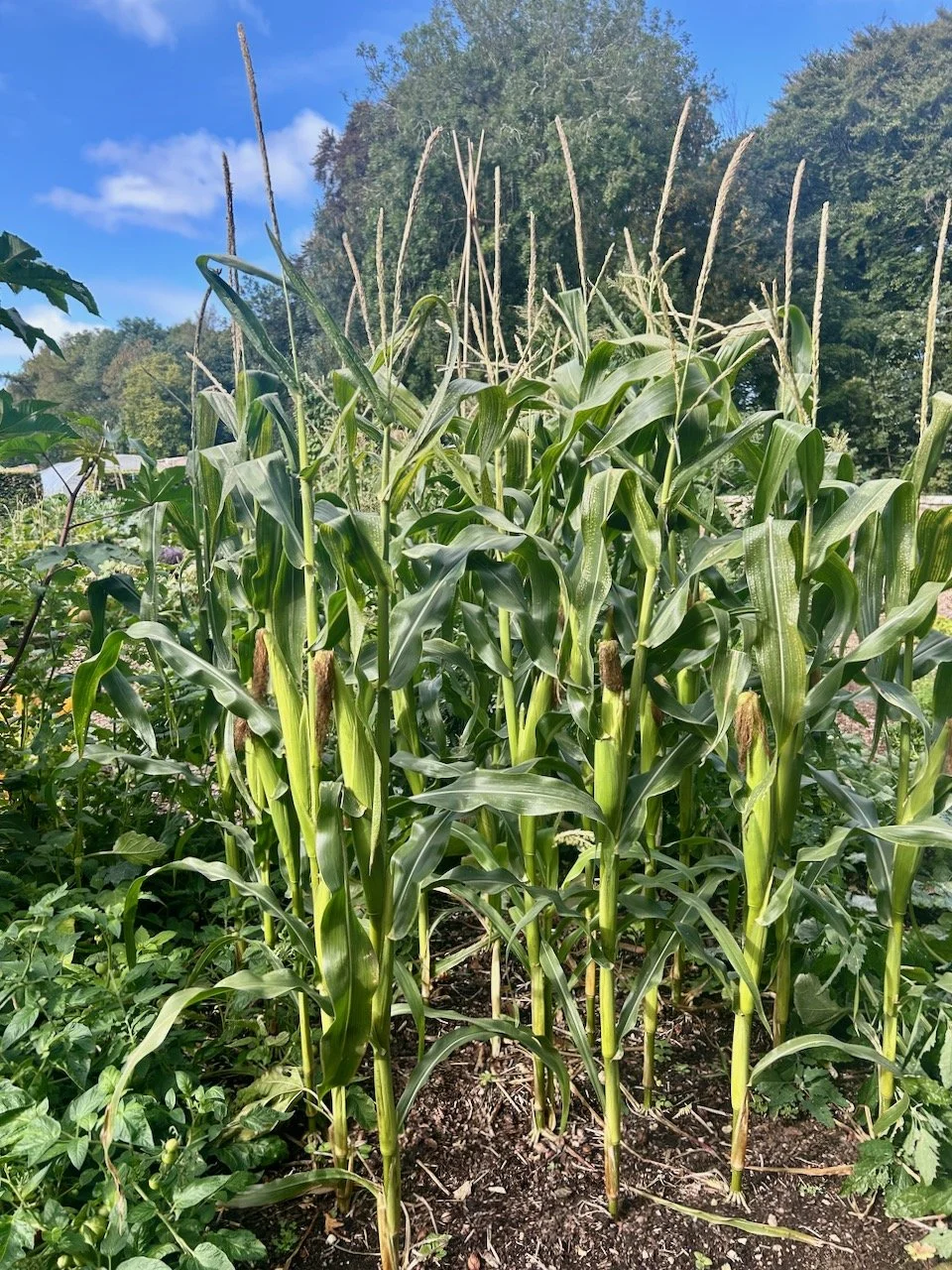
There’s nothing better than fresh sweetcorn on the cob is there, and none can be fresher than these - I can’t wait for the local sweetcorn this year, though there’s a good few months before I’ll see these in the farm shops, let’s hope there’s plenty of sun this summer to make them extra sweet.

Sweetcorn growing in the potager at Scampston Hall
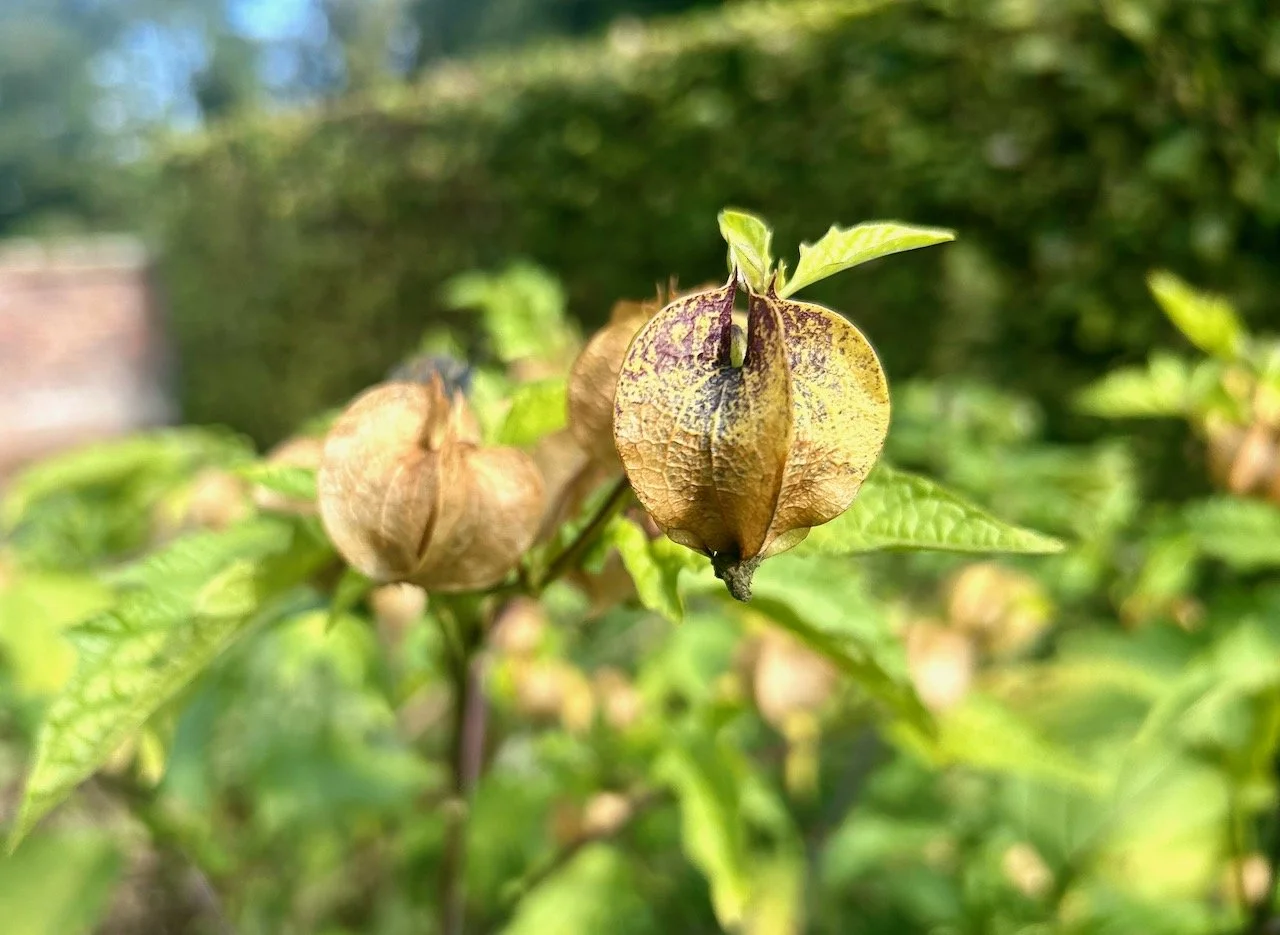
The papery lanterns of the physallis starting to turn brown

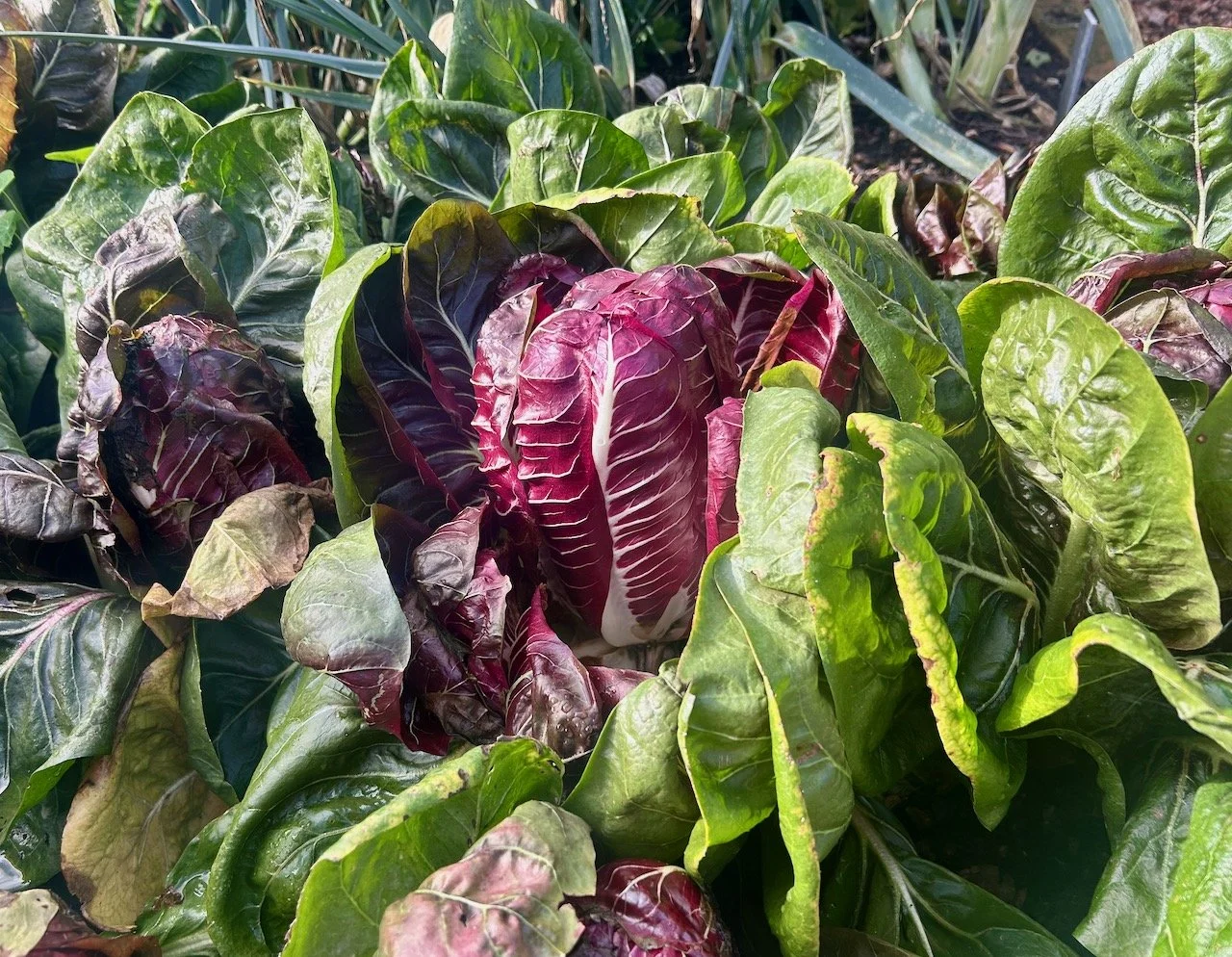
I was pleased to see the red chicory growing in a Yorkshire garden - we’re a bit further south, so by rights that means we should be able to grow them too. I love their colour and structure, and I also love them in a blue cheese risotto which MOH makes - it’s the best flavoured risotto, most I can give or take but this one I’ll always have, thank you very much. Many years back I remember we scoured our part of South London for a red chicory without a huge amount of success, but times have changed and I see them much more often now, but to grow my own - and have that risotto almost on tap - now that would be the dream.

Red chicory growing in the Potager at Scampston Hall
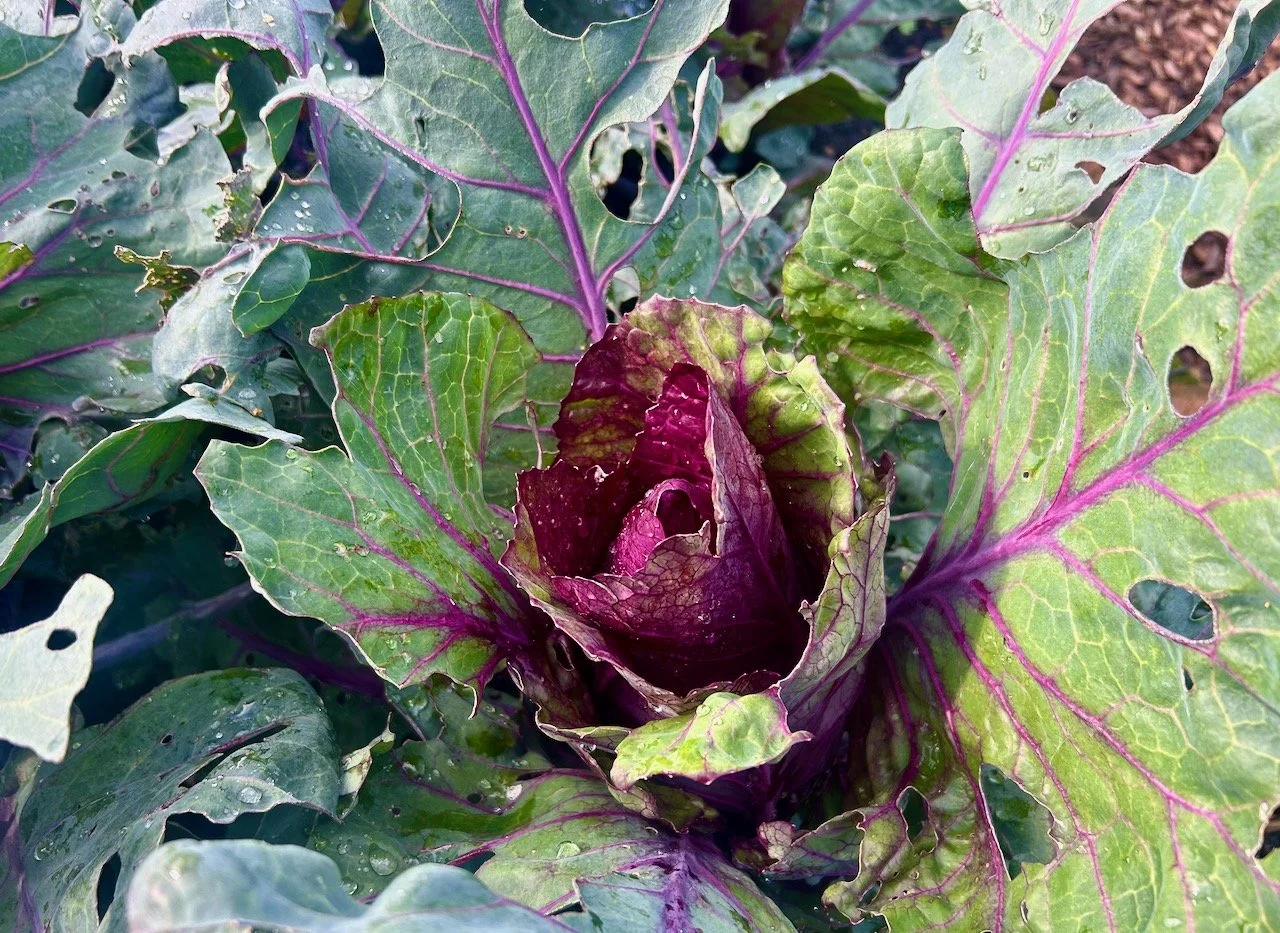
Looking down into a red hearted cabbage, outer leaves quite nibbled

I’m also a sucker for photographing cabbages with their characterful, and clearly very tasty, nibbled leaves. I’ve long given up on my long held dream of growing many varieties of cabbages in perfectly straight rows (as once seen at the Lost Gardens of Heligan in Cornwall), and would settle for a couple of slightly less nibbled ones that could end up in the kitchen at some point!

The Walled Garden has so much more to see, and not everything that you’d expect to see so look out for further posts in the coming weeks to see what else this fantastic space has to offer.

Nottinghamshire's tropical garden

Yes, you read that right. A while back I spotted Honeytrees tropical garden in a local Facebook group, and my interest was piqued. It’s close to us, a little over ten miles away and never in my wildest dreams did I imagine anything quite so lush, or tropical so close by. I also spotted that they planned to open every weekend in August as part of the National Garden Scheme. As MOH has long had a hankering for including a banana tree in the plans for our garden it made sense to go along - we managed to get there on the last day of August, and their last day of opening for the year - phew.

It was amazing. Packed full of plants, and then some more on top of that.

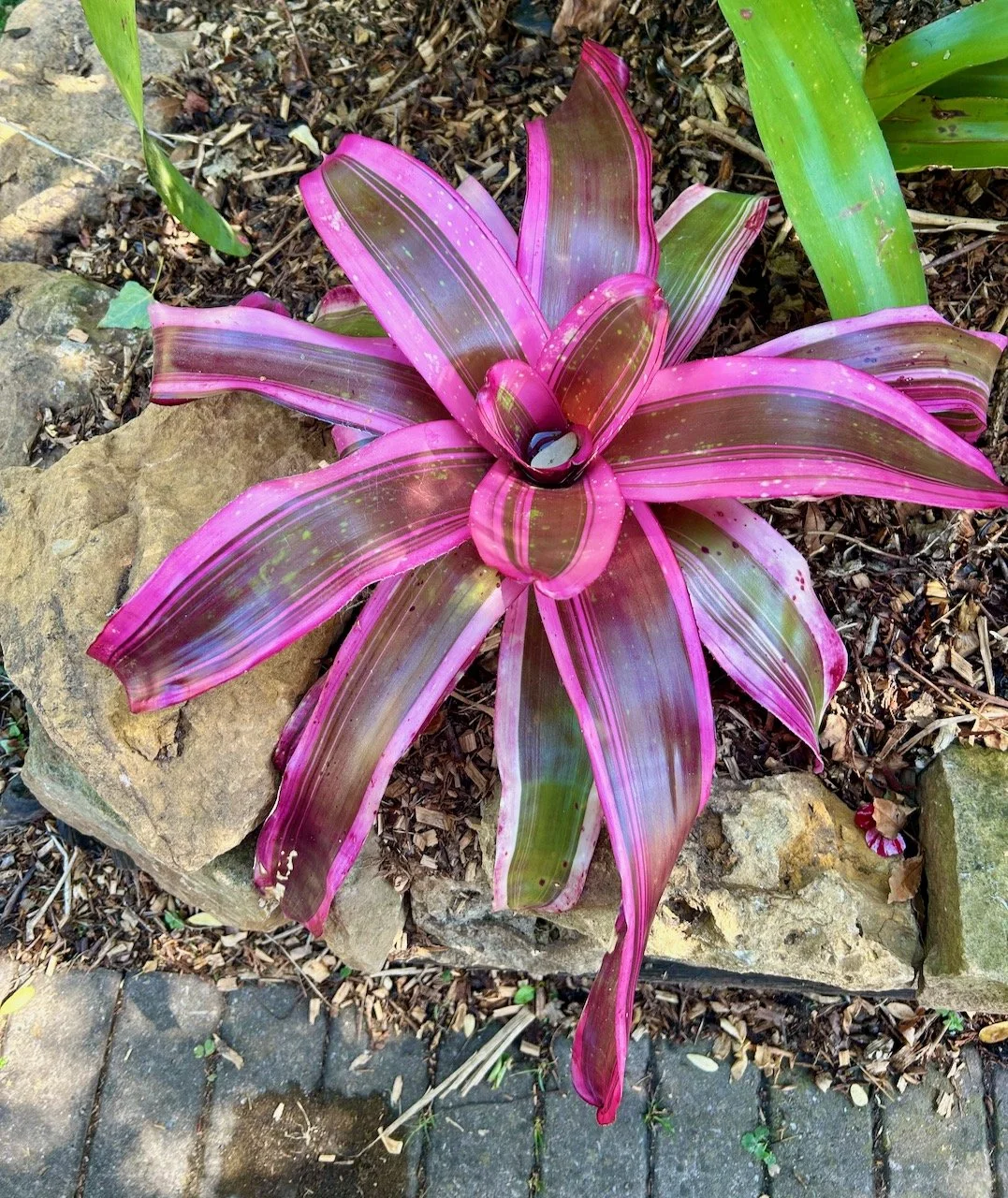
A bright pink bromeliad looking gorgeous

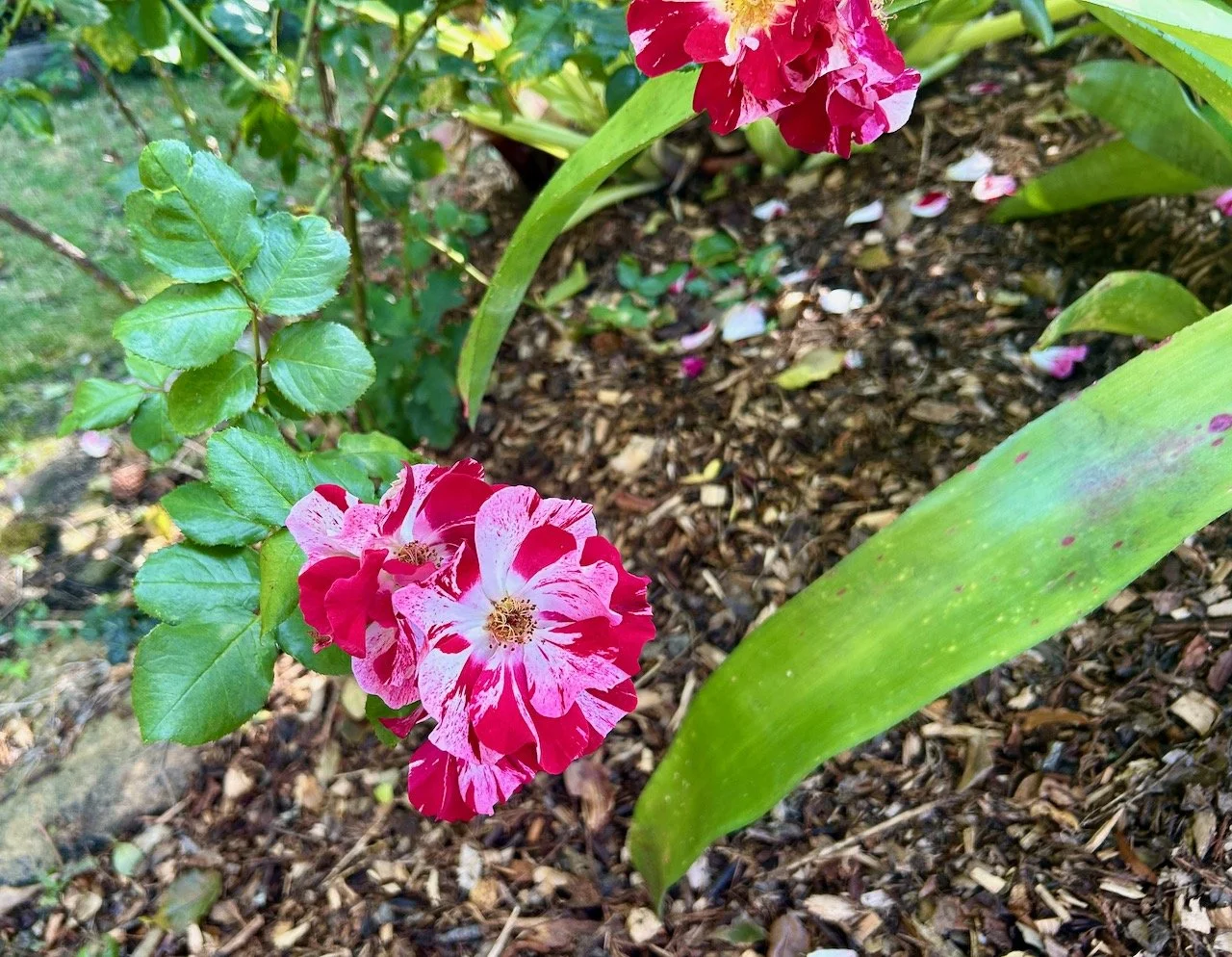
And on this chilly December day I thought I could do with a burst of tropical colour. What I didn’t really expect to see though was some roses, but I did.

An unexpected pink and red striped rose

The garden was packed full of plants and structures including a viewing platform - and while it was a relatively large plot it wasn’t overly huge. It just goes to show that you really can transform spaces with some thought, and a lot of passion.

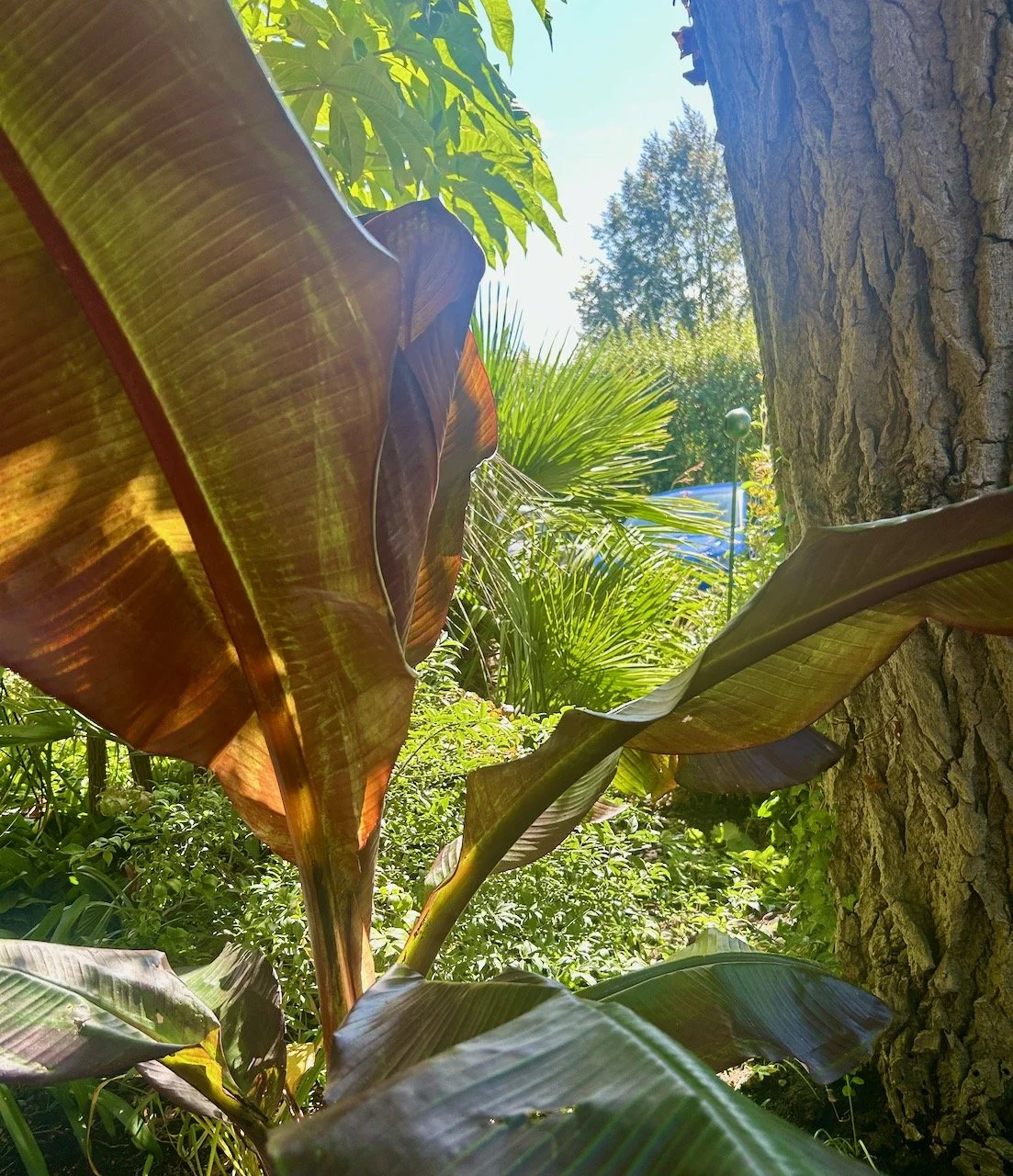
the sun shining through the red banana leaves with the tree fern leaves behind
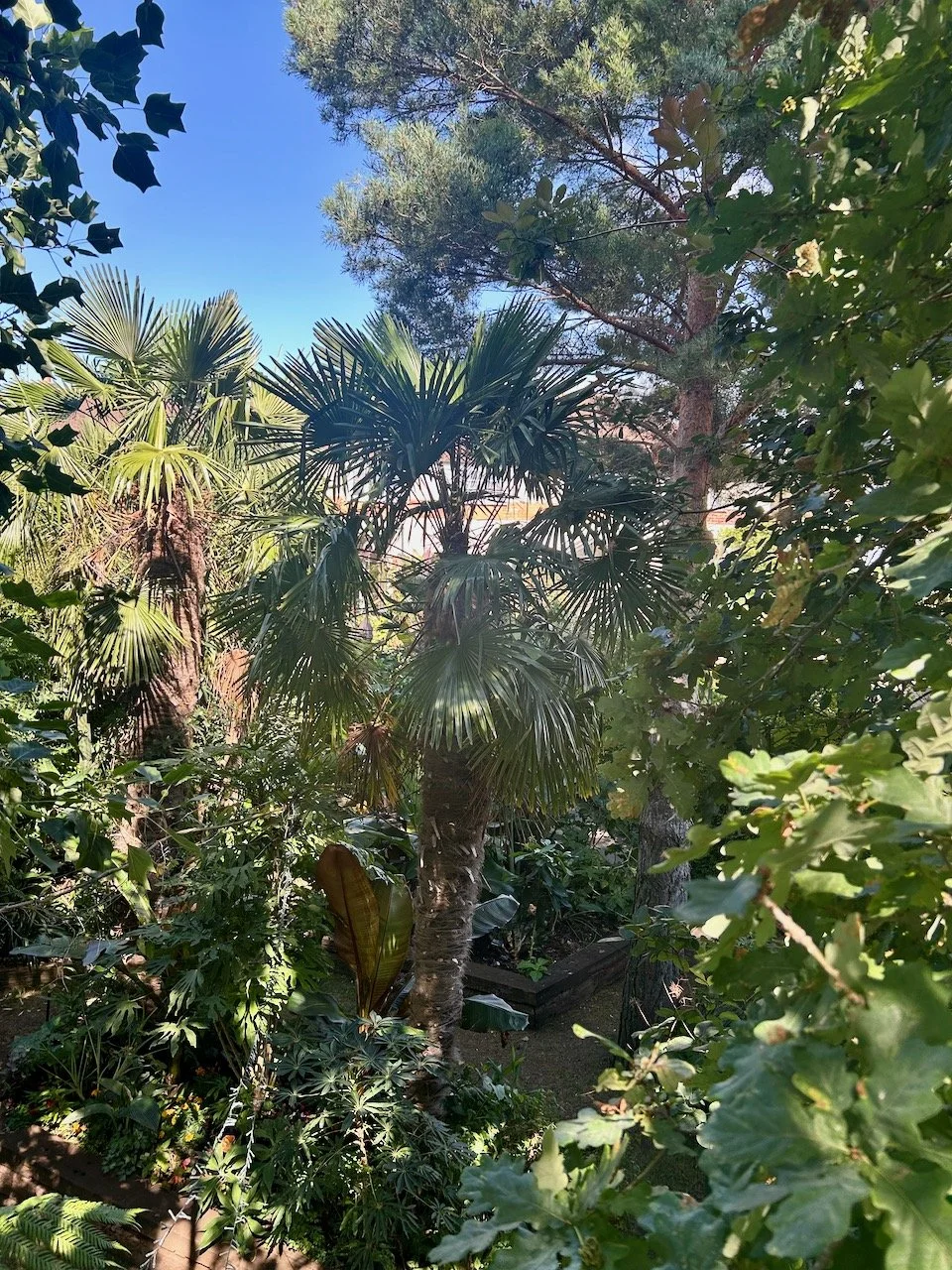
palm trees and oak trees together
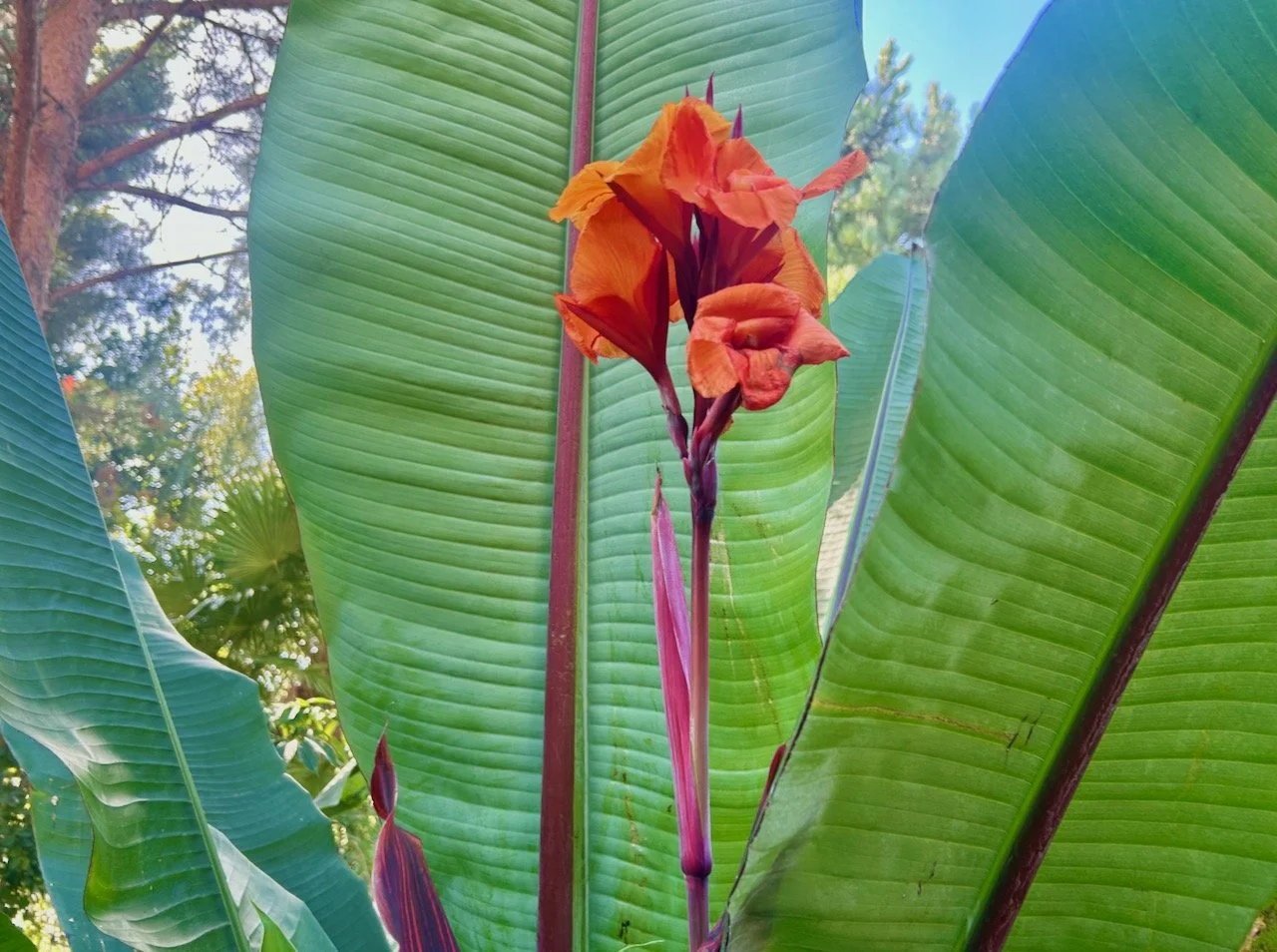
The orange canna flower with the large banana leaves behind
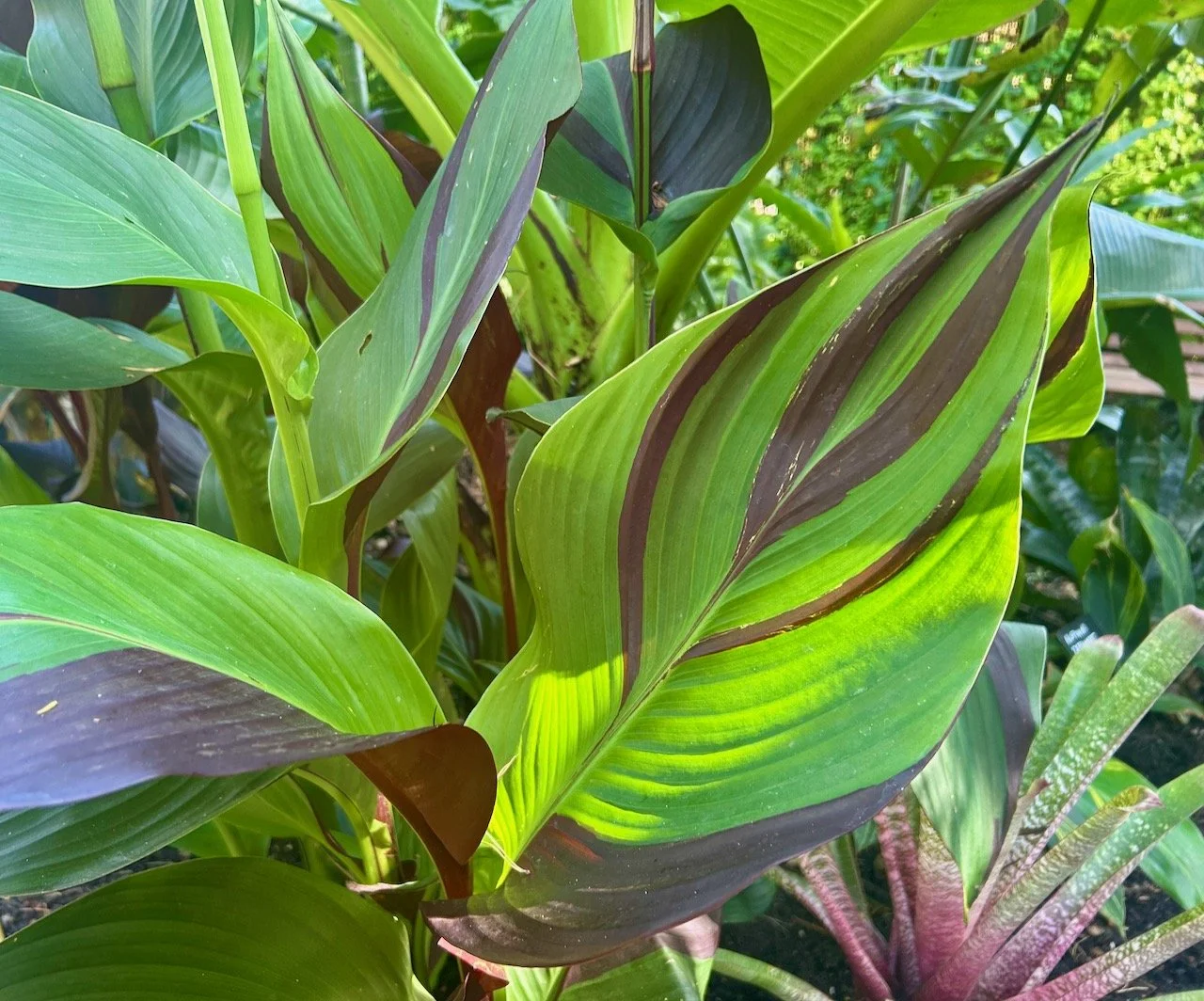
large green and chocolate 'striped' leaves

For MOH it’s the colour of the cannas, and the scale of the banana plants that appeal to him. For me it’s the multicoloured foliage and less than usual shapes.

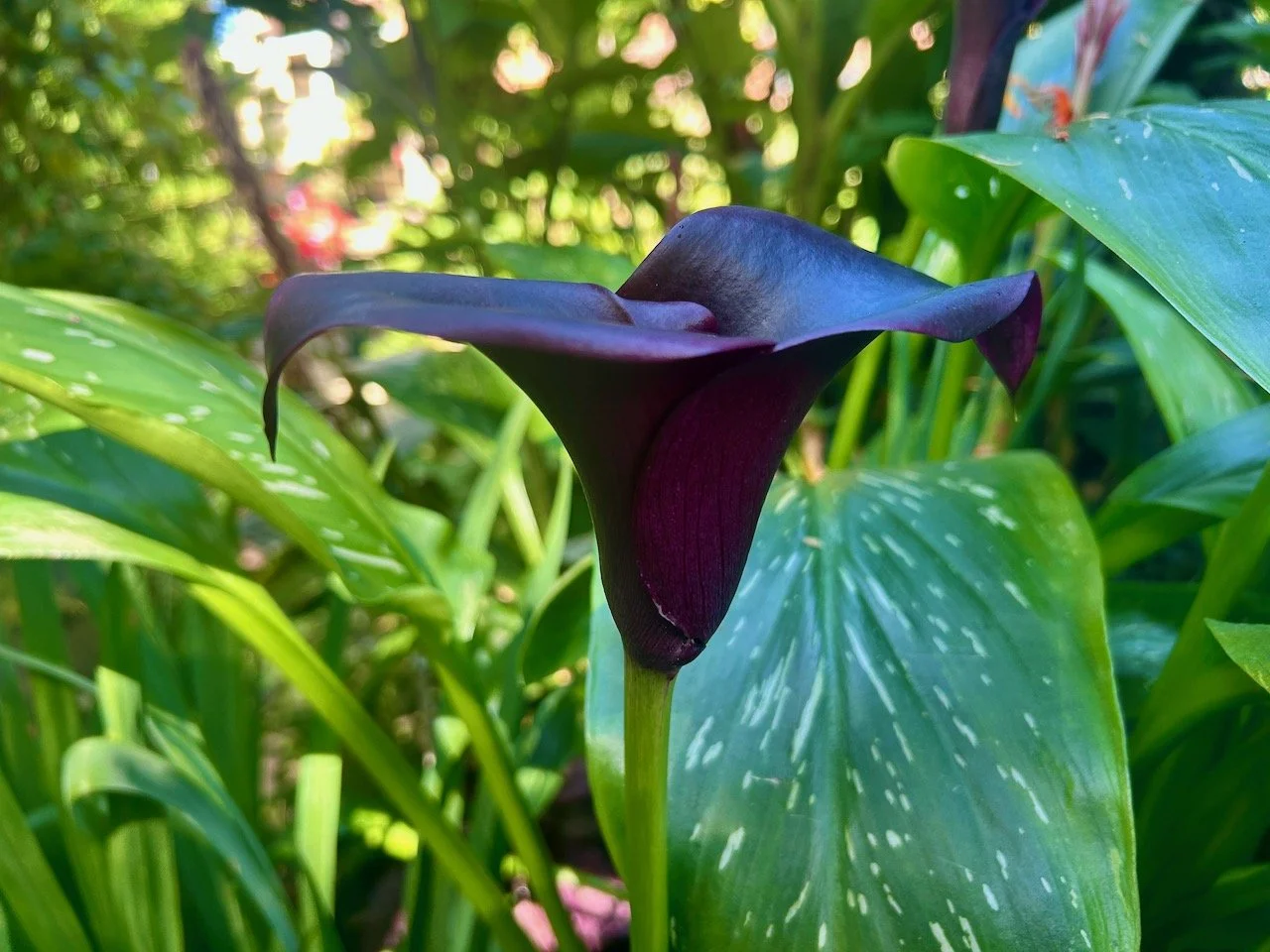
A deep purple almost black lily
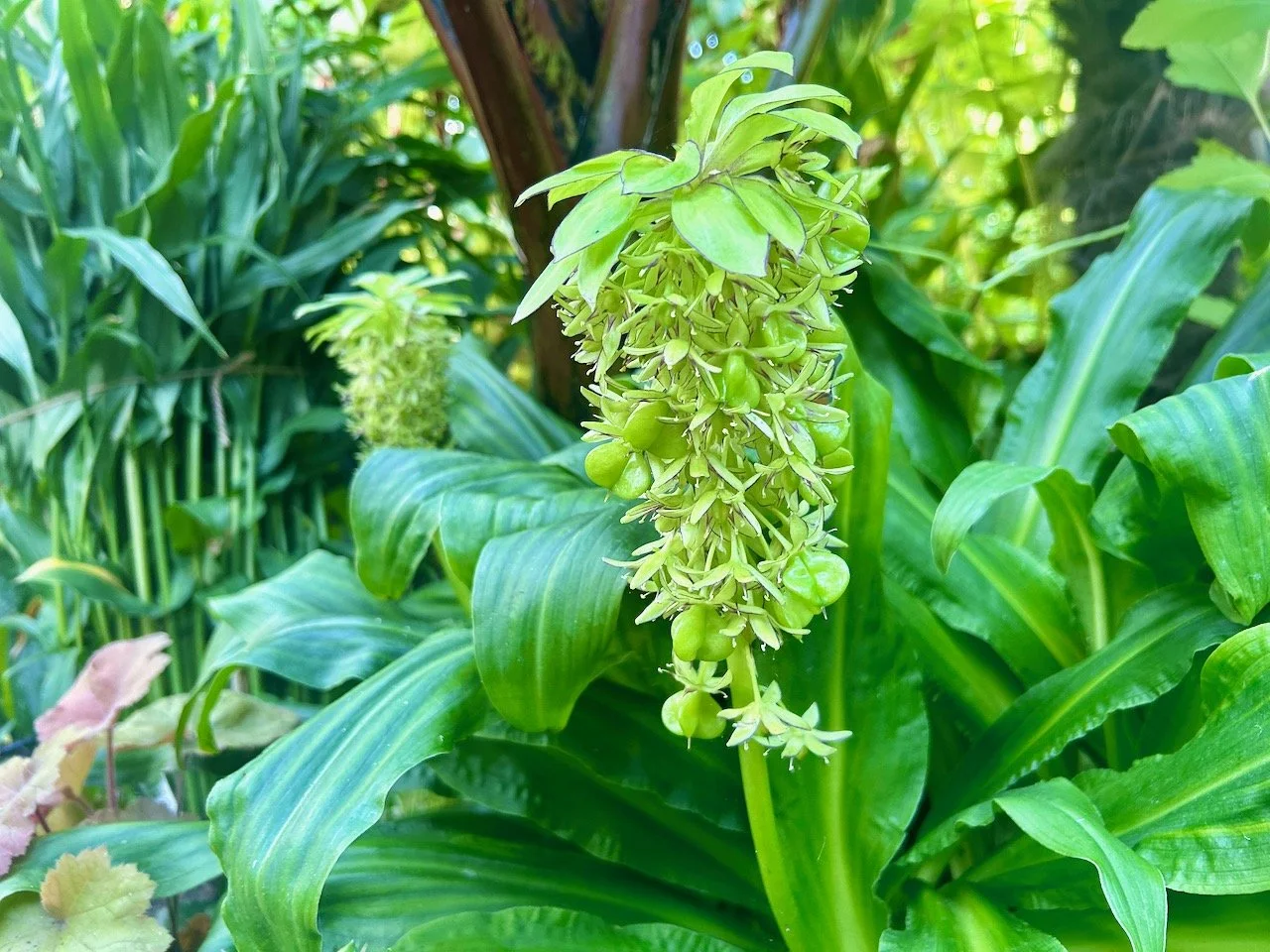
the fascinating flowers of the pineapple lily

And as we went around the garden, each turn wowed us more. I’m not about to turn my plot into a tropical garden - I’ve seen how much work goes into this garden - but I would like to incorporate some of the plants we saw when we visited.

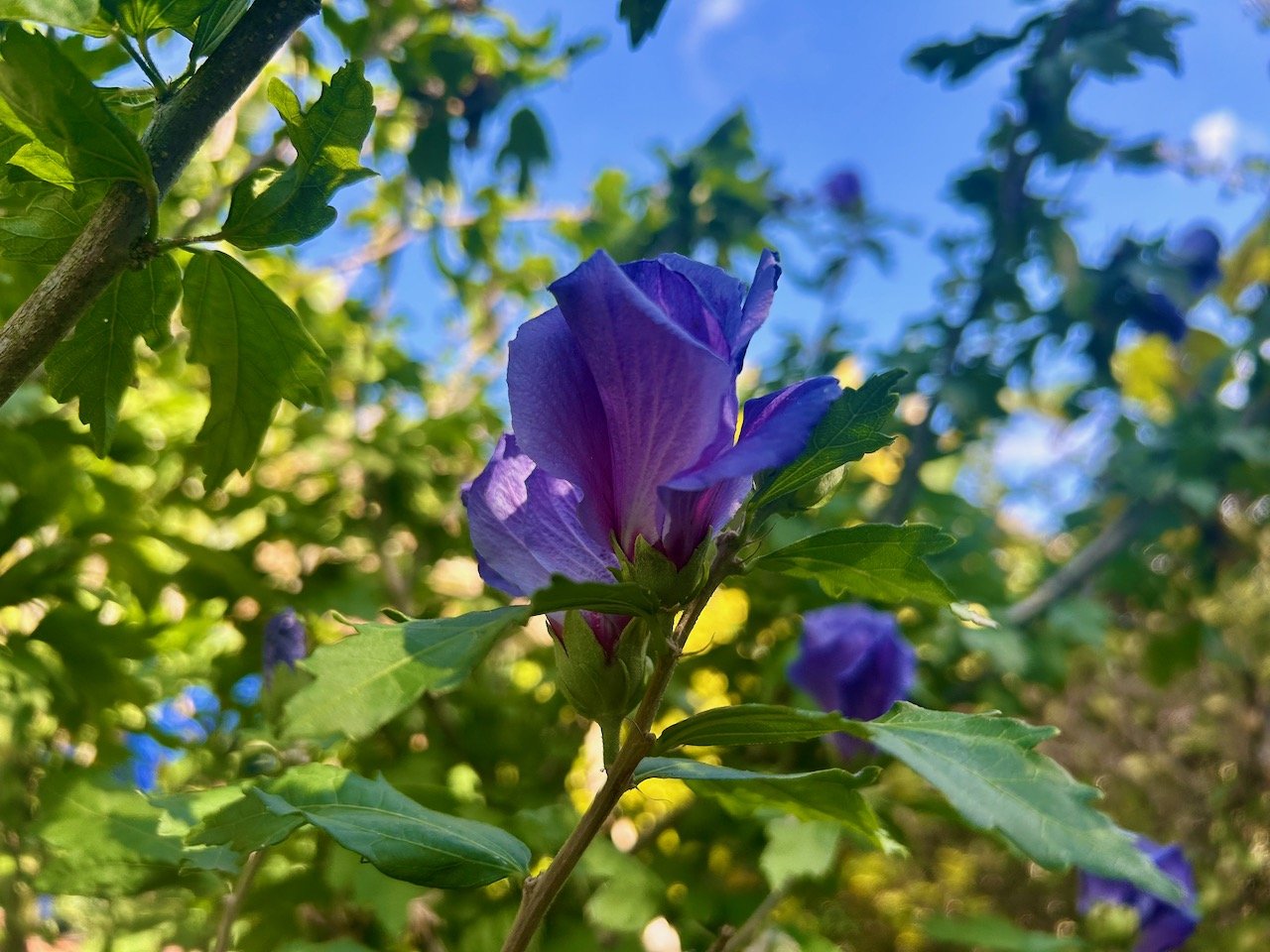
An almost blue hibiscus flower against the blue sky and bushes
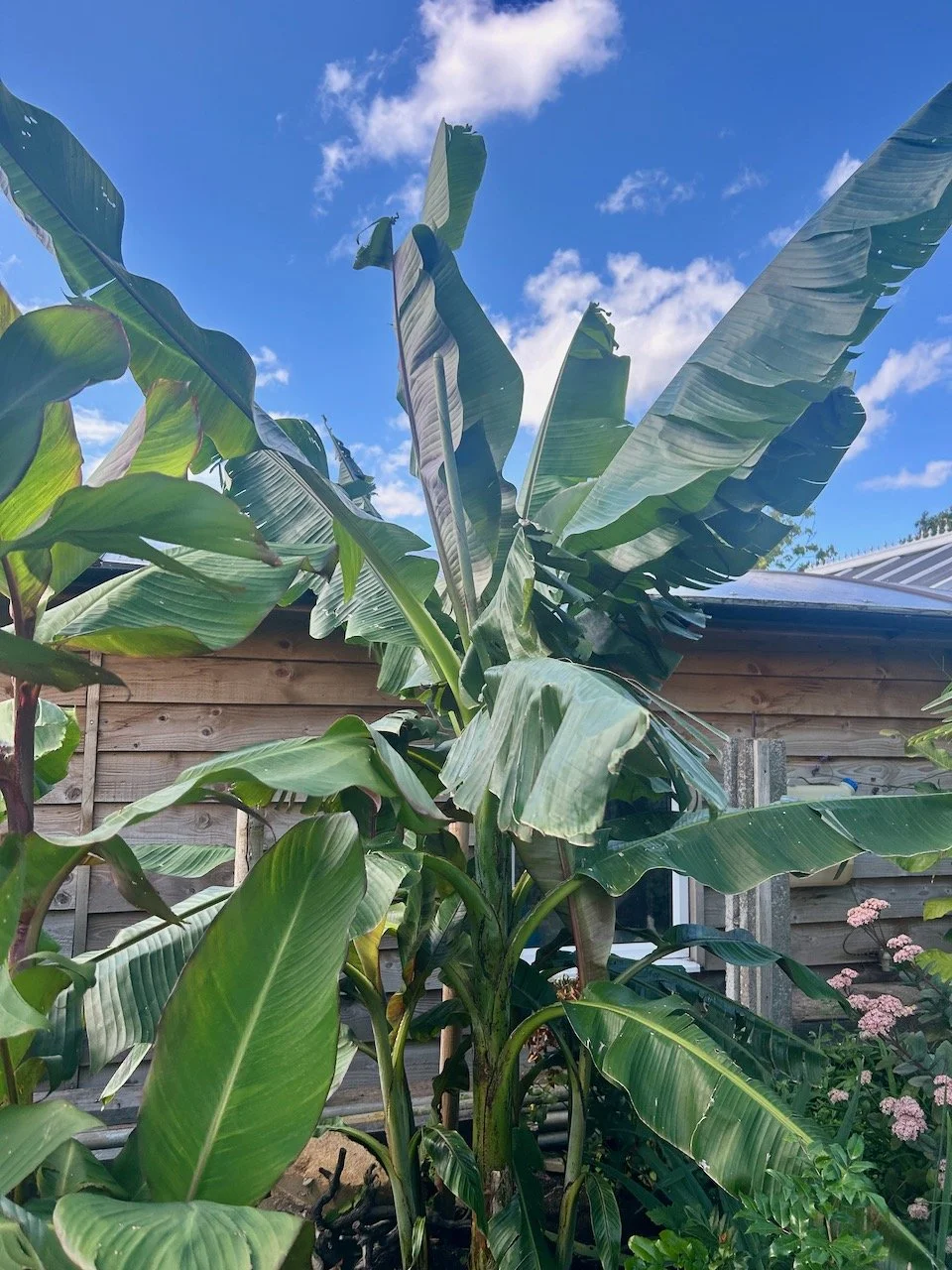
A banana tree taller than the shed

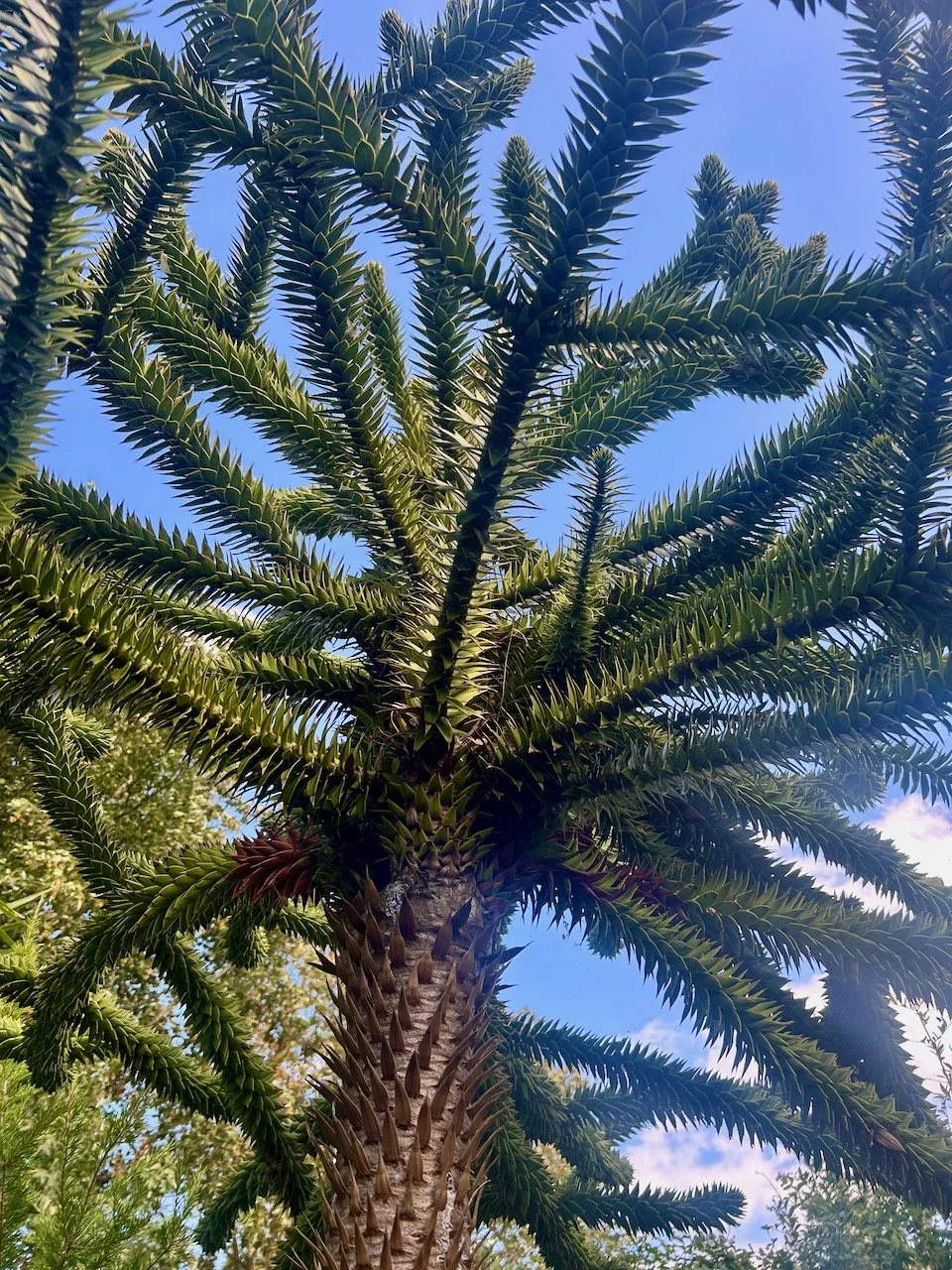
Maybe not a monkey tree though…

Looking up at the spiky monkey tree

With so many tropical plants and not so tropical winters, many of the plants needed to be sheltered at this time of year. There were a lot of pots, but also a lot of plants already in hot houses, which were already pretty hot back in August.

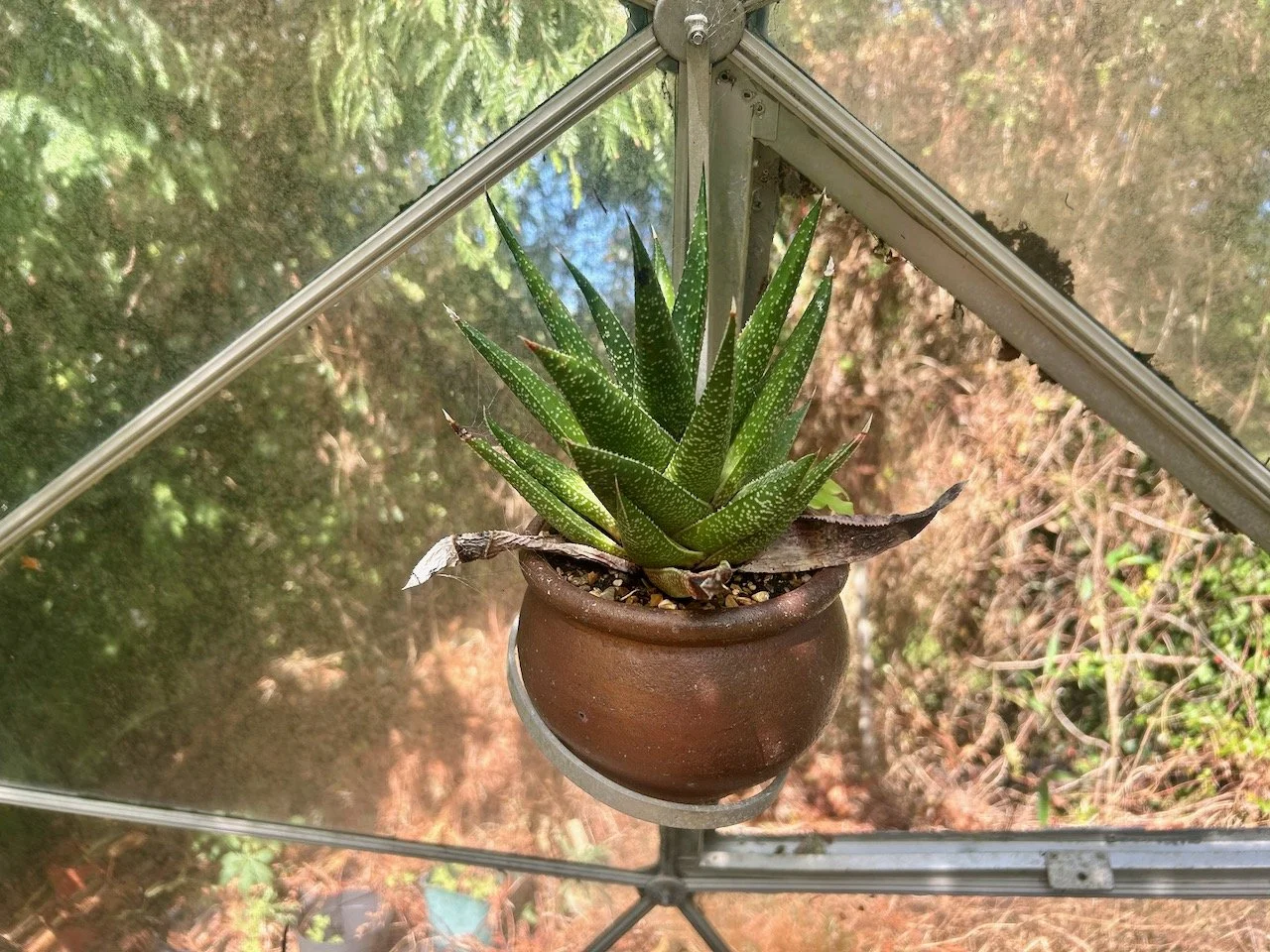
A potted succulent hanging in the greenhouse

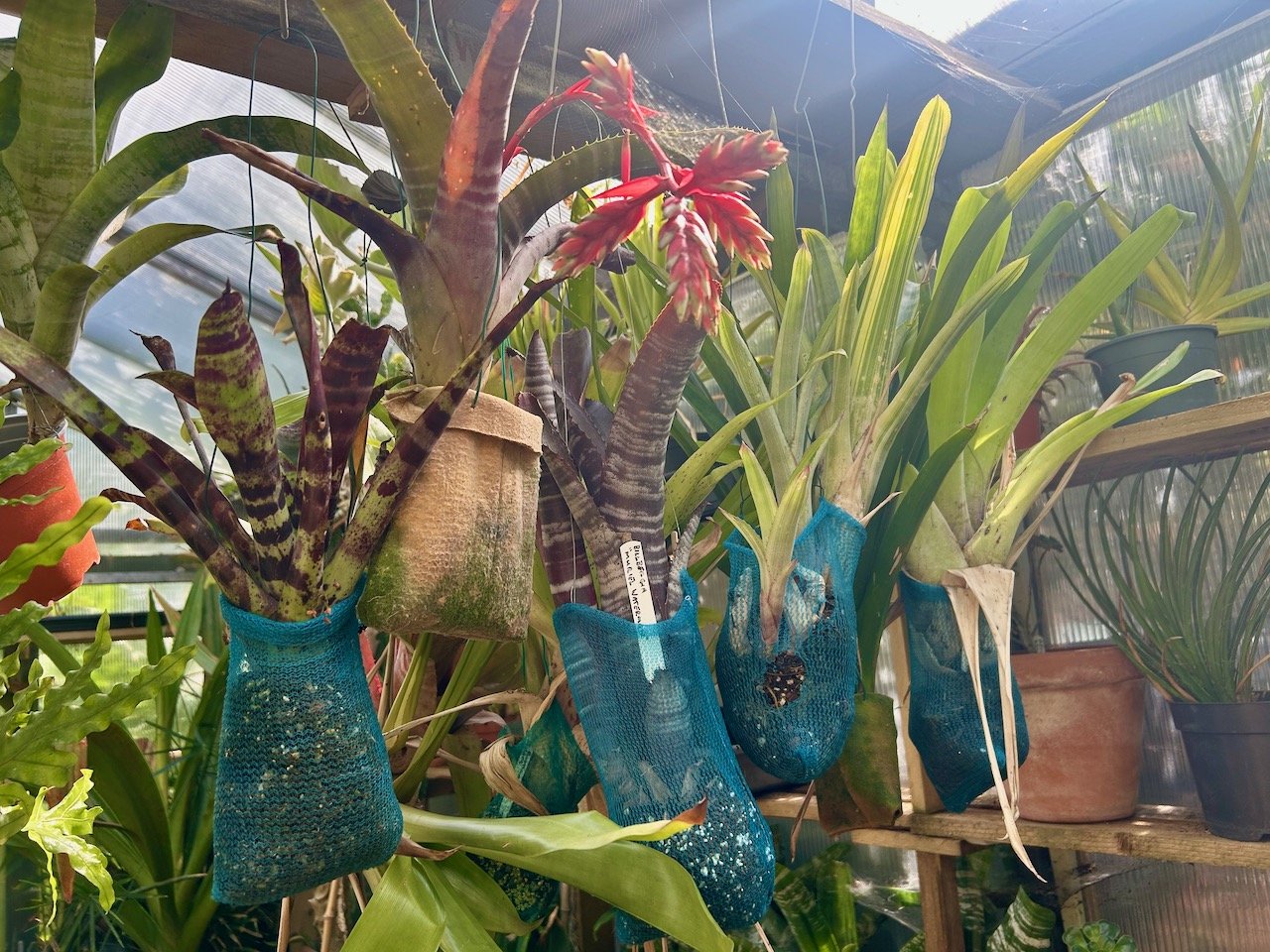
The work I mentioned before included lots of propagation, and I mean lots!

tropical plants hanging in their net socks in the greenhouse
Shelves of plants growing in pots and 'net socks' in a greehouse

Some of the plants were for sale, and we were sorely tempted. But in the end we left empty handed but with a bit more knowledge about caring for the plants, and knowing that we’d be back again to visit and at some point likely to be ready to make a purchase too, but not until we’ve got somewhere to overwinter it properly to give it the best chance of surviving, and that could be a little while yet - no doubt much to MOH’s frustration.